

Master of Science in Health Informatics
book_2 Learning Mode: Online
Program Overview
The Master of Science in Health Informatics (MSHI) at MUSC prepares you to lead in today’s data-driven health care environment. This fully online health informatics degree equips professionals to transform health care data into actionable insights that improve patient outcomes, clinical decision-making, and operational performance. Through applied coursework in health information systems, health care analytics, digital health, data governance, and artificial intelligence in healthcare, you’ll gain in-demand skills. Flexible seven-week courses and multiple start dates allow you to complete the program in as few as three semesters and advance your career with confidence
Application Timeline
Spring 2027
Opens: July 1, 2026
Final deadline: Dec. 2, 2026
Summer 2027
Opens: July 1, 2026
Final deadline: April 7, 2027
Fall 2027
Opens: July 1, 2026
Final deadline: July 28, 2027
100%
of faculty active in health informatics research/practice
100%
of graduates employed within 3 months of graduation
2021-2022
100%
of graduates say informatics skills improved their work
92%
of graduates would recommend the MSHI program
New graduate survey
Success you can measure
From national recognition to student satisfaction and real-world results, these numbers reflect the value and impact waiting for you in our program.
Learning Experience
Drive innovation at the intersection of health care and technology with advanced training in data analytics, informatics systems, and leadership that prepares you to transform health outcomes.
Inside the Program
The Master of Science in Health Informatics (MSHI) program at MUSC is a CAHIIM-accredited graduate program designed to prepare professionals to lead and support data-informed transformation across healthcare organizations. The program combines foundational knowledge of health information systems with applied learning focused on analytics, workflow optimization, quality improvement, and digital health.
Delivered fully online in seven-week courses, the MSHI is intentionally structured to support both early-career professionals seeking entry into health informatics roles and working professionals looking to advance or pivot within the healthcare sector. The program offers three admission points each academic year, providing flexibility for students to begin when it best aligns with their personal and professional schedules.
Students can complete the MSHI in as few as three semesters (one year), allowing for efficient progression without sacrificing academic rigor. Throughout the program, students engage with faculty who bring expertise in health informatics, analytics, and healthcare operations, and develop practical skills aligned with the evolving needs of healthcare organizations.
As part of an academic health system, the MSHI benefits from MUSC’s strong connection to healthcare practice, research, and innovation, preparing graduates to contribute meaningfully in informatics and data-enabled roles across diverse healthcare settings.
Career-focused learning
The MSHI offers a student-centered, applied learning experience designed for working professionals and early-career learners seeking to advance in data-informed healthcare roles. Courses integrate real-world healthcare scenarios, case studies, applied learning, and problem-based learning to ensure immediate relevance to professional practice.
Delivered fully online in seven-week courses, the program emphasizes regular and substantive interaction with faculty through structured learning activities, guided discussions, applied assignments, and timely feedback. Faculty bring academic expertise and professional experience in health informatics, analytics, and healthcare operations, supporting students as they apply concepts to authentic healthcare challenges.
Learning is assessed through competency-based, performance-focused evaluations, including applied learning, analyses, and presentations aligned with clearly defined course and program learning outcomes. These assessments are designed to mirror the types of tasks health informatics professionals encounter in practice, such as analyzing data, evaluating systems, supporting decision-making, and addressing organizational and ethical considerations.
Throughout the program, students develop the ability to translate health data into actionable insight, collaborate across clinical and technical teams, and responsibly use digital tools and emerging technologies, including artificial intelligence, to support healthcare quality, efficiency, and innovation. Ongoing reflection and feedback promote continuous learning and inform ongoing and continuous program improvement.
Experiential Learning
The Master of Science in Health Informatics (MSHI) includes an experiential learning requirement that allows students to choose the option that best aligns with their career goals. Students complete either a Thesis or a Capstone Project, both designed to apply and integrate knowledge gained throughout the program.
A flexible, career-aligned experience
Both options ensure students demonstrate mastery of program competencies while allowing flexibility to pursue research-oriented or applied professional pathways aligned with individual career objectives.
Curriculum
Standard
The standard Master of Science in Health Informatics curriculum consists of 36 credits and is designed to be completed in six semesters. Below is the standard plan of study outlining the structured progression of coursework as you advance through the program.
Semester 1
| Course ID | Course Title | Credits |
|---|---|---|
| HIN701 | Health Informatics Foundations | 3 |
| HIN702 | Introduction to Healthcare Information | 3 |
| Semester Total | 6 | |
Semester 2
| Course ID | Course Title | Credits |
|---|---|---|
| HIN704 | Healthcare Data-Content | 3 |
| HIN708 | Applied Statistics & Research | 3 |
| Semester Total | 6 | |
Semester 3
| Course ID | Course Title | Credits |
|---|---|---|
| HIN705 | Electronic Health Records | 3 |
| HIN706 | Systems Analysis & Design | 3 |
| Semester Total | 6 | |
Semester 4
| Course ID | Course Title | Credits |
|---|---|---|
| HIN710 | Data Mining & Analytics | 3 |
| HIN716 | Ethical, Legal & Regulatory Issues in Health Informatics | 3 |
| Semester Total | 6 | |
Semester 5
| Course ID | Course Title | Credits |
|---|---|---|
| HIN719 | Advanced Health Information Technology & Data Techniques | 3 |
| HIN720 | Current Issues & Advanced in Health Informatics | 3 |
| Semester Total | 6 | |
Semester 6
During the sixth semester, you will select from either the Capstone series or the Thesis series.
| Course ID | Course Title | Credits |
|---|---|---|
| Capstone | ||
| ELEC | Choose from approved elective listing | 3 |
| HIN718 | Health Informatics Capstone | 3 |
| Thesis | ||
| HIN780 | Health Informatics Thesis | 6 |
| Semester Total | 6 | |
| Curriculum Total | 36 | |
Accelerated
The accelerated Master of Science in Health Informatics curriculum consists of 36 credits and is designed to be completed in three semesters. Below is the standard plan of study outlining the structured progression of coursework as you advance through the program.
Semester 1
| Course ID | Course Title | Credits |
|---|---|---|
| HIN701 | Health Informatics Foundations | 3 |
| HIN702 | Introduction to Healthcare Information | 3 |
| HIN704 | Healthcare Data-Content | 3 |
| HIN708 | Applied Statistics & Research | 3 |
| Semester Total | 12 | |
Semester 2
| Course ID | Course Title | Credits |
|---|---|---|
| HIN705 | Electronic Health Records | 3 |
| HIN706 | Systems Analysis & Design | 3 |
| HIN710 | Data Mining & Analytics | 3 |
| HIN716 | Ethical, Legal & Regulatory Issues in Health Informatics | 3 |
| Semester Total | 12 | |
Semester 3
During the third semester, you will select from either the Capstone series or the Thesis series.
| Course ID | Course Title | Credits |
|---|---|---|
| Capstone | ||
| HIN719 | Advanced Health Information Technology & Data Techniques | 3 |
| ELEC | Elective from approved listing | 3 |
| HIN718 | Health Informatics Capstone | 3 |
| HIN720 | Current Issues & Advanced in Health Informatics | 3 |
| Thesis | ||
| HIN719 | Advanced Health Information Technology & Data Techniques | 3 |
| HIN720 | Current Issues & Advanced in Health Informatics | 3 |
| HIN780 | Health Informatics Thesis | 6 |
| Semester Total | 12 | |
| Curriculum Total | 36 | |
Approved Electives
| Course ID | Course Title | Credits |
|---|---|---|
| HAP705 | Health Economics | 3 |
| HAP721 | Healthcare Delivery Systems | 3 |
| HAP735 | Health Law & Risk Management | 3 |
| HAP737 | Organization Theory | 3 |
| IP717 | Telehealth Teams of the Future | 3 |
Why health informatics now?
Health care organizations are generating more data than ever before, yet data alone does not improve care. Health informatics professionals play a critical role in ensuring that health information is accurate, accessible, secure, and translated into meaningful action that improves quality, efficiency, and patient outcomes.
As health systems expand the use of electronic health records, analytics platforms, digital health tools, and artificial intelligence, there is a growing demand for professionals who understand healthcare environments and information systems. Health informatics sits at the intersection of clinical care, operations, data, and technology, supporting safer care delivery, better decision-making, and more effective resource use.
At the same time, healthcare leaders face increasing pressure to improve performance, reduce inefficiencies, address workforce challenges, and demonstrate value. Health informatics expertise enables organizations to move beyond reporting data to strategically using information to support quality improvement, population health, operational optimization, and innovation.
The MSHI prepares graduates to meet these challenges by developing applied skills that align with the evolving needs of healthcare organizations today and the data-driven future of healthcare delivery.
Clinical education
As South Carolina’s only comprehensive academic health science center, MUSC offers a collaborative, interdisciplinary learning environment grounded in research and real-world application. The MSHI program reflects MUSC’s commitment to preparing health care professionals who can lead in a data-driven, digitally enabled future.
Health Informatics transforms healthcare data into insight that improves care, operations, and outcomes.
Industry-aligned credentials & skill development
The Master of Science in Health Informatics (MSHI) is designed to develop job-ready skills that align with current and emerging workforce needs in health informatics, analytics, and digital health. The curriculum emphasizes applied competencies that employers value, focusing on how data, systems, and information are used to improve healthcare delivery, quality, and operational performance.
Through coursework and applied learning, students build skills in areas such as:
- Health information systems and electronic health records
- Healthcare data analytics and decision support
- Workflow analysis and process improvement
- Data governance, privacy, security, and regulatory compliance
- Quality measurement and performance improvement
- Digital health and emerging technologies, including artificial intelligence
The program prepares students to apply informatics principles across real healthcare environments, supporting roles that require collaboration between clinical, operational, and technical teams.
Students also have access to professional development resources that allow them to personalize skill development based on their career goals. Opportunities may include exposure to industry-recognized frameworks, tools, and learning pathways aligned with organizations such as HIMSS and other leading professional associations in health informatics and healthcare technology.
Through this flexible and applied approach, graduates leave the MSHI program with a portfolio of practical skills that support immediate workplace contribution and long-term career growth in health informatics and data-enabled healthcare roles.
Accredited & workforce aligned
The MSHI is accredited by the Commission on Accreditation for Health Informatics and Information Management Education (CAHIIM), the recognized accrediting body for health informatics education programs. CAHIIM accreditation affirms that the program meets established standards for curriculum quality, learning outcomes, and workforce preparation.
The MSHI curriculum is aligned with professional competencies expected of health informatics practitioners and is designed to support applied skill development relevant to today’s healthcare environments. As part of an academic health system, the program reflects current healthcare practice, regulatory considerations, and emerging trends in data-driven care delivery.
Join a virtual information session
Learn more about the program's curriculum, admissions requirements, the application process, and what sets MUSC apart from other universities.
Your path to admission
Discover key information about application steps and required documentation to help you move forward with confidence.
Eligibility Requirements
Applicants to the Master of Science in Health Informatics (MSHI) program must meet the following criteria:
- Hold a bachelor’s degree from a regionally accredited institution in the U.S. or an equivalent degree from a recognized foreign institution
- Demonstrate a strong overall academic record, with a preferred minimum GPA of 3.0 or higher on a 4.0 scale in coursework relevant to the proposed area of graduate study.
- Applicants with a GPA below 3.0 are still encouraged to apply and may be asked to submit additional materials (such as a resume, letters of recommendation) or participate in an admissions interview to assess readiness for graduate-level study
Minimum Abilities
At MUSC, we actively support all students to ensure their success in both academic and clinical settings. To support this goal, the university outlines the essential qualities and functional abilities required for participation in its educational programs. These include a range of observational, communication, motor, intellectual and behavioral skills necessary for safe and effective practice.
Application Process
The following process outlines how and when your materials will be reviewed.
- Submit the MUSC application.
- Submit all supplemental materials, if not included within the application.
- Once all materials have been received and verified, your application will be reviewed.
Application Requirements
- MUSC Application: All applicants must submit an MUSC application.
- Supplemental Materials: Applicants will need to submit the following supplemental materials.
- Official transcripts from all degree bearing institutions
- Letters of recommendation: If an applicant’s GPA is below 3.0 on a 4.0 scale, they may be required to provide references to provide letters of recommendation.
All information above must be received by the deadline to be considered for admission to the program. Without all materials, applications will be incomplete. It is the applicant's responsibility to review the progress of their application to ensure that all application materials have been submitted.
International Applicants
MUSC welcomes international applicants and offers tailored guidance to support you throughout the admission process. View details at International Applicants.
Why MUSC is the right choice
Learn firsthand why students choose MUSC with small class sizes, personalized faculty support and a relevant curriculum that prepares professionals for impactful roles.

Mark Mitchiner, M.D.

Emma Springs

Ashley Bowman
Funding your path forward
Explore tuition, program costs and financial support for the Master of Science in Health Informatics as you prepare to advance your career in health data and digital health innovation.
Tuition & Fees
Tuition and fees listed below apply to the 2026-27 academic year and are per semester unless otherwise noted.
| Fee Type | Fee |
|---|---|
| Application Fee (per application) | $100 |
| Matriculation Fee (upon applicant acceptance) | $500 |
Full-Time
| Tuition/Fee Type | Fall | Spring | Summer |
|---|---|---|---|
| In-State Tuition (Per Credit Hour) | $775 | $775 | $775 |
| Out-of-State Tuition (Per Credit Hour) | $775 | $775 | $775 |
Cost of Attendance
The Cost of Attendance, or COA, estimates the total educational expenses for an enrollment period. The information below reflects the 2026-27 academic year. The COA includes direct costs, such as tuition and fees, billed by the university, as well as indirect costs you may need to plan for, including housing, food, transportation, books and other personal expenses.
The COA helps determine the maximum amount a student may borrow in an academic year and supports funding-related determinations, such as grants, scholarships, loans and others.
Your actual expenses may be lower than the COA, especially with careful budgeting. MUSC's Office of Student Financial Literacy can help you create a budget that supports your education, personal needs and long-term financial goals.
Full-Time
| Item | Year 1 | Year 2 | Est. Total |
|---|---|---|---|
| Direct Costs | |||
| In-State Tuition | $20,925 | $6,975 | $27,900 |
| Out-of-State Tuition | $20,925 | $6,975 | $27,900 |
| Fees | - | - | - |
| Health Insurance | $4,000 | $1,689 | $5,689 |
| In-State Total Direct Costs | $24,925 | $8,664 | $35,589 |
| Out-of-State Total Direct Costs | $24,925 | $8,664 | $35,589 |
| Indirect Costs | |||
| Living Expenses (Food and Housing) | $27,144 | $9,048 | $36,192 |
| Miscellaneous Personal Expenses | $2,880 | $960 | $3,840 |
| Transportation | $3,240 | $1,080 | $4,320 |
| Books, Course Materials, Supplies and Equipment | $6,310 | $1,730 | $8,040 |
| Total Indirect Costs | $39,574 | $12,818 | $52,392 |
| Estimated Total Costs | |||
| In-State Total Costs | $64,499 | $21,482 | $85,981 |
| Out-of-State Total Costs | $64,499 | $21,482 | $85,981 |
Part-Time
| Item | Year 1 | Year 2 | Est. Total |
|---|---|---|---|
| Direct Costs | |||
| In-State Tuition | $13,950 | $13,950 | $27,900 |
| Out-of-State Tuition | $13,950 | $13,950 | $27,900 |
| Fees | - | - | - |
| Health Insurance | $4,000 | $4,000 | $8,000 |
| In-State Total Direct Costs | $17,950 | $17,950 | $35,900 |
| Out-of-State Total Direct Costs | $17,950 | $17,950 | $35,900 |
| Indirect Costs | |||
| Living Expenses (Food and Housing) | $27,144 | $27,144 | $54,288 |
| Miscellaneous Personal Expenses | $2,880 | $2,880 | $5,760 |
| Transportation | $3,240 | $3,240 | $6,480 |
| Books, Course Materials, Supplies and Equipment | $5,810 | $3,810 | $9,620 |
| Total Indirect Costs | $39,074 | $37,074 | $76,148 |
| Estimated Total Costs | |||
| In-State Total Costs | $57,024 | $55,024 | $112,048 |
| Out-of-State Total Costs | $57,024 | $55,024 | $112,048 |
Scholarships & Aid
MUSC offers scholarships for which you may be eligible. Some are awarded based on academic achievement; others are awarded based on community service, for example. However, the majority of scholarships awarded at MUSC are based on financial need. This means that these scholarships are only awarded to students who need some financial assistance to cover the cost of tuition and fees. If you would like to be considered for a financial need-based scholarship, you must have an up-to-date Free Application for Federal Student Aid (FAFSA) on file. Make sure you list the Medical University of South Carolina on your FAFSA form, along with MUSC's code: 003438. We encourage you to submit your FAFSA as early as possible. It is recommended to submit your FAFSA in January if you plan to enroll in the fall.
Career Outlook
Source: National Center for O*NET Development. (2025). O*NET Online. Retrieved July 26, 2026, from https://www.onetonline.org.
Student Outcome Data
Understand the strong outcomes and career trajectories of graduates, including advancement into roles such as data analyst, implementation specialist and CIO in health care.
Enrollment Rates
The table below provides enrollment rates by year for the Master of Science in Health Informatics program.
| Year | Applicants | Offered | Accepted | Enrolled | Transfers |
|---|---|---|---|---|---|
| 2023-2024 | 24 | 20 | 14 (70%) | 14 (70%) | 0 |
| 2022-2023 | 20 | 20 (100%) | 9 (45%) | 8 (40%) | 0 |
| 2021-2022 | 30 | 24 (80%) | 29 (96.67%) | 24 (80%) | 0 |
| 2020-2021 | 30 | 29 (96.67%) | 24 (80%) | 24 (80%) | 0 |
Graduation Rates
The table below provides graduation rates by year for the Master of Science in Health Informatics program.
| Year | Graduation Rate |
|---|---|
| 2023-2024 | 100% |
| 2022-2023 | 100% |
| 2021-2022 | 100% |
| 2020-2021 | 75% |
Employment Rates
The following table provides the employment rate for graduates seeking employment within six months of graduation.
| Year | Employment Rate |
|---|---|
| 2023-2024 | 100% |
| 2022-2023 | 100% |
| 2021-2022 | 100% |
| 2020-2021 | 100% |
Program Faculty
MUSC’s MSHI faculty bring strong academic credentials and real-world expertise in health systems, analytics, digital health, quality improvement, policy, and healthcare operations

Ashley Parks, DrPH, MPH, MCHES, CPH
Director and Associate Professor, Master of Science in Healthcare Quality & Safety and Master of Science in Health Informatics Programs

Abby Swanson Kazley, Ph.D.
Professor, Master of Science in Health Informatics
Abby Kazley, Ph.D., is an award-winning educator and researcher who currently leads the Master of Science in Health Informatics program in the College of Health Professions at the Medical University of South Carolina (MUSC). She also previously led and taught in the Master in Health Administration program at MUSC. She earned her Doctor of Philosophy in Health Services Organization and Research from VCU. Her research examines the correlations between health information technology use and outcomes such as cost, quality, and efficiency.
Dr. Kazley teaches in the areas of management and strategy. She is recognized as a leader in competency-based education and the use of technology in education with more than 60 peer-reviewed publications. She has served in a number of leadership roles, including treasurer of the Healthcare Information Management and Systems Society (HIMSS) South Carolina Chapter.

Kevin K. Wiley, Ph.D., MPH
Assistant Professor, Department of Healthcare Leadership & Management
Frequently Asked Questions
Learning Experience & Professional Development
Health informatics focuses on how health information and data are collected, managed, analyzed, and used to improve healthcare delivery, quality, efficiency, and decision-making. It brings together healthcare knowledge, information systems, analytics, and digital technologies to support safe, effective, and data-informed care.
The MSHI focuses on data, information systems, analytics, and digital health, while the MHA emphasizes organizational leadership, finance, and healthcare operations. Choosing between them depends on your career goals and interests.
The MHA is designed for individuals seeking organizational and operational leadership roles in healthcare. The curriculum emphasizes healthcare management, finance, strategy, policy, and leadership development. MHA graduates typically pursue roles such as healthcare administrators, managers, directors, and executives responsible for leading people, programs, and organizations.
The MSHI, by contrast, focuses on the use of data, information systems, and digital technologies to improve healthcare delivery. The program prepares professionals to analyze, manage, and apply health information to support decision-making, quality improvement, system optimization, and digital health initiatives. MSHI graduates often work in informatics, analytics, health IT, and data-enabled roles that bridge clinical, operational, and technical teams.
No. The MSHI program does not require a technical or programming background. The curriculum is designed to support students from diverse professional backgrounds and builds informatics and data concepts progressively through applied coursework and faculty guidance.
Online courses are delivered through MUSC’s learning management system and include a mix of interactive content, case studies, discussions, projects, and assessments designed to foster engagement, collaboration, and applied learning.
The MSHI Student Services Team is available to help prospective and current students evaluate delivery formats, course pacing, and capstone vs. thesis options based on individual goals and experience.
The MSHI curriculum is structured around program competencies aligned with professional health informatics standards and workforce needs. Students develop applied skills in health information systems, data analytics, informatics-enabled decision support, workflow and process analysis, data governance, and quality improvement. The curriculum also emphasizes the responsible use of data and emerging technologies, including artificial intelligence, to support effective, ethical, and data-driven healthcare delivery.
Yes. MUSC is a member of the American College of Healthcare Executives (ACHE) Higher Education Network, providing students access to national resources, networking, and professional development. In addition, students are encouraged to engage locally and nationally with leading professional organizations aligned with their career goals, such as Healthcare Information and Management Systems Society (HIMSS), Medical Group Management Association (MGMA), and other relevant industry organizations to support personalized professional growth.
Careers & Outcomes
Graduates of the MSHI pursue roles that support healthcare analytics, informatics, and digital transformation, including health informatics specialist, clinical informatics analyst, health data analyst, EHR or health IT implementation specialist, quality and performance improvement analyst, and digital health project coordinator. Graduates work across hospitals, health systems, health technology firms, consulting organizations, payer organizations, and public health agencies.
Health informatics jobs are growing rapidly. According to the U.S. Bureau of Labor Statistics, employment for health information technologists and medical registrars is projected to grow 15% from 2024 to 2034 — much faster than average. Growth is driven by expanding electronic health records (EHRs), digital health tools, and healthcare data analytics. (As of March 2026)
Nationally, the median salary for health information technologists and medical registrars was $67,310 in 2024, with top earners exceeding $112,000 annually.
In South Carolina, health informatics professionals earn an average of approximately $76,800 per year, with higher-level roles exceeding $116,900 depending on experience and setting.
(As of March 2026)
South Carolina offers growing demand for health informatics professionals across hospital systems, health technology vendors, payer organizations, and public health departments. Competitive salaries and ongoing investment in digital health infrastructure support strong career opportunities statewide.
Program Structure & Delivery
Yes. MSHI courses are offered year-round, allowing students to maintain momentum and progress through the program at a pace that fits their schedule.
Courses are delivered in 7-week terms designed to allow focus and momentum. Multiple start dates are offered each year, enabling flexible progression.
Students typically enroll in one to two courses per seven-week period or two to four courses per semester, depending on their professional and personal commitments.
For a 3-credit course delivered over seven weeks, students should expect to spend approximately 15–20 hours per week engaging in course activities, including instruction, faculty interaction, readings, and assignments. The accelerated format concentrates engagement into a shorter timeframe while maintaining academic rigor and regular, substantive interaction with faculty and peers.
Yes. The program is structured so that students can balance professional and personal commitments while completing coursework, regardless of delivery format.
The MHA program requires 36 total credit hours. Prior graduate-level coursework may be reviewed for transfer credit eligibility, in accordance with university policy.
Time to completion varies based on course load and enrollment status. The program offers both standard and accelerated progression to meet each student’s needs. Students can progress in a completion cadence that best suits their individual needs, with multiple entry points throughout the year.
The Master of Science in Health Informatics (MSHI) degree is delivered fully online in seven-week courses, allowing students to engage with coursework on a flexible schedule. This format is designed to support both early-career professionals building foundational leadership skills and working professionals balancing full-time employment, family responsibilities, and career advancement. Asynchronous delivery enables students to learn at times that work best for them while maintaining consistent academic momentum. The program's structure is accessible, predictable, and supportive of working adults, allowing students to progress at a pace aligned with their career stage and personal circumstances.
Admissions & Application
No. The MSHI program does not require GRE or GMAT scores as part of the application.
Applications are accepted on a rolling basis, and students are currently admitted into the program three (3) times each year.
Yes. The MSHI program is generally eligible for employer tuition assistance and tuition remission, subject to employer and institutional policies. Students are encouraged to confirm eligibility with their employer and with the MSHI Student Services Coordinator.
Prospective students begin the application through the MUSC Admissions portal. Admissions decisions are made on a rolling basis. Detailed application instructions, deadlines, and requirements are available through the MUSC Office of Enrollment Management.
For specific questions about admissions, curriculum, or advising, prospective students can contact the MSHI program team directly at chp-recruit@musc.edu.
Guided by purpose & principles
See how program guidance centers on impactful leadership, ethical practice, community commitment and interdisciplinary collaboration in health technology.
Program Learning Outcomes (PLOs)
Graduates of the Master of the Master of Science in Health Informatics (MSHI) program will be able to:
PLO 1: Evaluate, integrate, and steward health data, information systems, and analytics to generate decision-ready health intelligence that supports clinical, operational, research, and population health decisions across diverse healthcare settings.
PLO 2: Analyze and interpret clinical, operational, quality, safety, and population health data to inform performance improvement, system optimization, and evidence-based decision-making, without requiring advanced programming expertise.
PLO 3: Assess internal and external organizational, regulatory, ethical, legal, and socio-technical factors that influence the responsible design, implementation, governance, and use of health information systems, analytics, and artificial intelligence.
PLO 4: Design and evaluate innovative, evidence-informed informatics strategies and solutions that address real-world healthcare challenges, support digital transformation, and improve quality, access, equity, efficiency, and outcomes.
PLO 5: Design and implement communication strategies that effectively translate data, analytics, and health intelligence into actionable insights for diverse stakeholders, aligning evidence with organizational goals and decision-making needs.
PLO 6: Evaluate and apply emerging digital health technologies—including data analytics and artificial intelligence tools—to enhance healthcare delivery and research, while addressing ethical, organizational, operational, and governance considerations.
PLO 7: Demonstrate continuous self-awareness and professional growth through reflective practice, accurate self-assessment, incorporation of feedback, and alignment of ongoing development with long-term career goals.
Competencies
Upon completion of the MSHI program, graduates should be able to:
- Analyze and evaluate health information systems to inform improvements in clinical workflows and patient outcomes.
- Design and implement evidence‑based strategies and interventions that integrate data science principles and informatics technologies to address operational, population health or research challenges.
- Conduct and interpret rigorous research or evaluation to employ applied statistics, data mining or system evaluation methods to generate insights that influence practice, policy or scholarly discourse.
- Demonstrate ethical and regulatory acumen, applying pertinent legal, privacy and professional standards in the design, use and governance of health data and technology.
- Collaborate and communicate effectively across interprofessional teams, articulating analytic findings, system requirements or research outcomes to stakeholders with clarity and scholarly precision.
- Develop and justify data‑driven improvement initiatives, framed by critically reflective inquiry, that anticipate and respond to evolving health informatics needs at institutional or societal levels.
Vision
The Master of Science in Health Informatics (MSHI) program seeks to change what’s possible in healthcare by advancing the use of data, informatics, and digital technologies to improve care, decision-making, and health outcomes through responsible, ethical, and evidence-informed practice - locally, nationally, and beyond.
This vision guides curriculum design, competency development, and learning experiences that prepare graduates to apply health informatics, data, and digital technologies in support of evolving healthcare systems.
Values
At the core of our program, we are guided by a commitment to the following values that drive our mission:
- Compassion: We act with kindness, empathy and dignity.
- Collaboration: We achieve common goals through teamwork and partnerships.
- Innovation: We drive transformation by embracing new ideas, discoveries and practices.
- Integrity: We do the right thing and commit to accountability in words, actions and use of resources.
- Respect: We value everyone and their many perspectives to build trust and a sense of belonging.
Mission
The Master of Science in Health Informatics (MSHI) prepares professionals to improve healthcare delivery by effectively using data, information systems, and digital technologies. Grounded in applied, evidence-based practice, the program equips students with the informatics, analytical, and ethical competencies needed to support data-informed decision-making, quality improvement, and system optimization across healthcare organizations.
Serving South Carolina and beyond, the MSHI is designed for working professionals and early-career professionals seeking to advance or transition into health informatics roles through a flexible, fully online learning experience aligned with workforce and industry needs.
Advisory Council
The MUSC MSHI Advisory Council serves as an external board offering recommendations to the program. Members come from industry, consulting and academics and bring expertise in the area of informatics, innovation, technology, analytics, education, telemedicine and electronic health record (EHR) use. The council meets 1-2 times per year to review program practices and outcomes and makes recommendations on curriculum, growth, recruitment and development.
Council Members
- Shari Donley, MBA, CPHIMS, AVP IT Governance and Corporate HIPAA Officer, McLeod Health
- John Glaser, Ph.D., Program Director, Global Health Care Leaders, Harvard Medical School
- Michelle Hager, Managing Partner, Blue Cirrus Consulting
- Amanda James, MSHI, RN, Telehealth Nurse Manager, Ambulatory Specialty Services, Medical University of South Carolina
- Aaron Miri, DHA, FCHIME, CHCIO, EVP and Chief Digital & Information Officer, Baptist Health
- Jihad Obeid, M.D., Endowed Chair for Biomedical Informatics Associated with Clinical Effectiveness & Patient Safety, Medical University of South Carolina
- E. Haywood Titchener, MSHI, Clinical Application Manager, Medical University of South Carolina
- Matt Turner, MHA, VP of Business Intelligence, Aledade
- Sebastian van Delden, Ph.D., Provost and VP for Academic Affairs, Winthrop University
- Robert Warren, M.D., Ph.D., MPH, Epic Emeritus CMIO, Epic and Professor Emeritus of Pediatrics and Rheumatology, Medical University of South Carolina
Stories worth sharing
Read about the latest program news, alum achievements and innovative faculty research making a difference in health care delivery and policy.
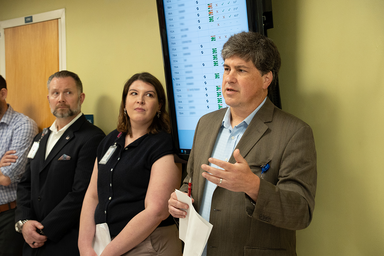
College of Health Professions + Division of Master of Science in Healthcare Quality and Safety
Fixing Things No One Asked Them to Fix: Why a Master’s in Healthcare Quality and Safety is Vital...
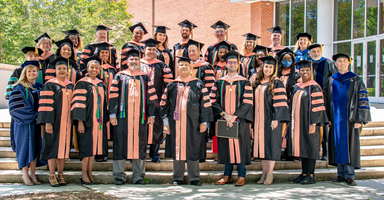
College of Health Professions + Department of Healthcare Leadership and Management
30 Years of Leadership: MUSC DHA Alumni Reflect on the Program That Shaped Their Careers

College of Health Professions + Department of Healthcare Leadership and Management
Why earn an MHA at MUSC: Online and hybrid options for healthcare leaders
Accreditation & Recognition
The Master of Science in Health Informatics (MSHI) program at the Medical University of South Carolina is accredited by the Commission on Accreditation for Health Informatics and Information Management Education (CAHIIM), the recognized accrediting body for health informatics and health information management education programs in the United States. CAHIIM accreditation signifies that the program meets nationally established standards for curriculum quality, learning outcomes, and workforce preparation in health informatics.
The MSHI program’s CAHIIM accreditation profile, including required public disclosures, may be viewed here.