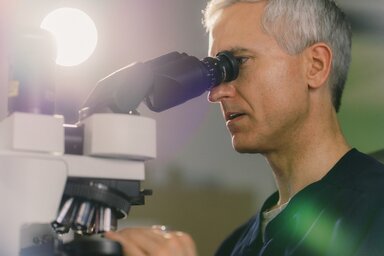


The need for skilled Pathologists’ Assistants is growing, and MUSC’s new Master of Science in Pathologists’ Assistant Studies (PathA) program is preparing students to meet it.
From human cadavers and state-of-the-art VR anatomy labs to hands-on clinical rotations, this on-campus program offers an immersive experience, equipping students with the specialized knowledge needed to support accurate diagnoses and high-quality patient care.
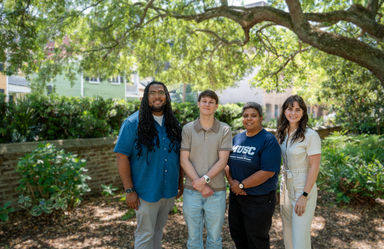
For an inside look at the program—from the interview process to career outcomes—we sat down with Derek Nelson, MSBS, MLS, PA(ASCP), Assistant Professor and Division Director, and Brooke Phelps, MS, PA(ASCP)CM, Instructor, to learn what life is really like as a Pathologists’ Assistant at MUSC.
What do you look for in an applicant during the interview?
We look for applicants who demonstrate a clear understanding of the pathologists’ assistant role, strong communication skills, and thoughtful reflection on their experiences. Professionalism, curiosity, and the ability to articulate why this career is a good fit are essential. We also value maturity and readiness for an intensive, hands-on graduate program.
Can you describe what the interview day is like?
Interview day is structured and welcoming, designed to give applicants a realistic view of the program. Candidates participate in a panel interview, a one-on-one conversation with the program director, a guided tour of our facilities, and time for questions and a program overview. The day is intentionally organized to feel informative rather than intimidating.
What skills or experiences help applicants stand out?
Shadowing or work experience in anatomic pathology is essential and helps applicants speak confidently about the profession. Strong attention to detail, time management, and teamwork skills are also important. Experiences that demonstrate professionalism and resilience in healthcare or laboratory settings stand out.
How does the program prepare students for clinical and lab work?
Students train in a dedicated pathologists’ assistant student lab designed to closely mimic a real-world anatomic pathology gross room and histology laboratory. The space is equipped with modern grossing stations, histology equipment, and tools commonly used in clinical practice. This allows students to build confidence and technical competence before entering clinical rotations.
How do students balance academic and hands-on learning?
The curriculum intentionally integrates classroom instruction with lab and clinical experiences. Students develop time management and organizational skills while immediately applying concepts in practical settings. Faculty provide structured support as students transition between didactic and hands-on learning.
When do students begin clinical rotations, and what settings are available?
Students begin clinical experiences in the summer semester of their second year, after completing their foundational didactic coursework. They gain hands-on training in surgical pathology across small and mid-sized community health systems and large academic medical centers. Students also rotate through forensic and medical autopsy services in coroner and medical examiner offices, gaining broad exposure to the full scope of practice.
What careers do graduates pursue after earning their degree?
Graduates most commonly work as certified pathologists’ assistants in hospital-based pathology departments, academic medical centers, private laboratories, and forensic settings. Some also pursue roles in tissue biobanking or within biopharma and industry partners supporting surgical pathology, such as medical device or diagnostics companies. The degree offers flexibility across both traditional and emerging practice environments.
What advice do you have for career changers considering PathA?
We encourage career changers to pursue shadowing opportunities and connect with practicing pathologists’ assistants to fully understand the role. Successful students tend to be detail-oriented, resilient, collaborative, and comfortable working in fast-paced clinical environments. A strong foundation in the sciences and a genuine interest in patient care through laboratory medicine are key to success.
If you’re ready to combine science, precision, and patient care in a dynamic health care role, MUSC’s Pathologists’ Assistant Studies program will provide you with the skills you need to confidently launch your career in this growing and impactful field.
Learn more about the PathA learning experience, career outcomes, and application timeline.

Katie Ennis
Recent Division of Pathologists Assistant Studies stories