
One of the biggest questions prospective students ask about hybrid learning is: "Will I get enough hands-on experience?"
For students in MUSC’s hybrid Occupational Therapy Doctorate (OTD) program, the answer is a resounding yes. From interactive online classes to immersive in-person labs at MUSC’s state-of-the-art hybrid campus in downtown Charleston, students learn by doing, collaborating, and applying their skills in real time.
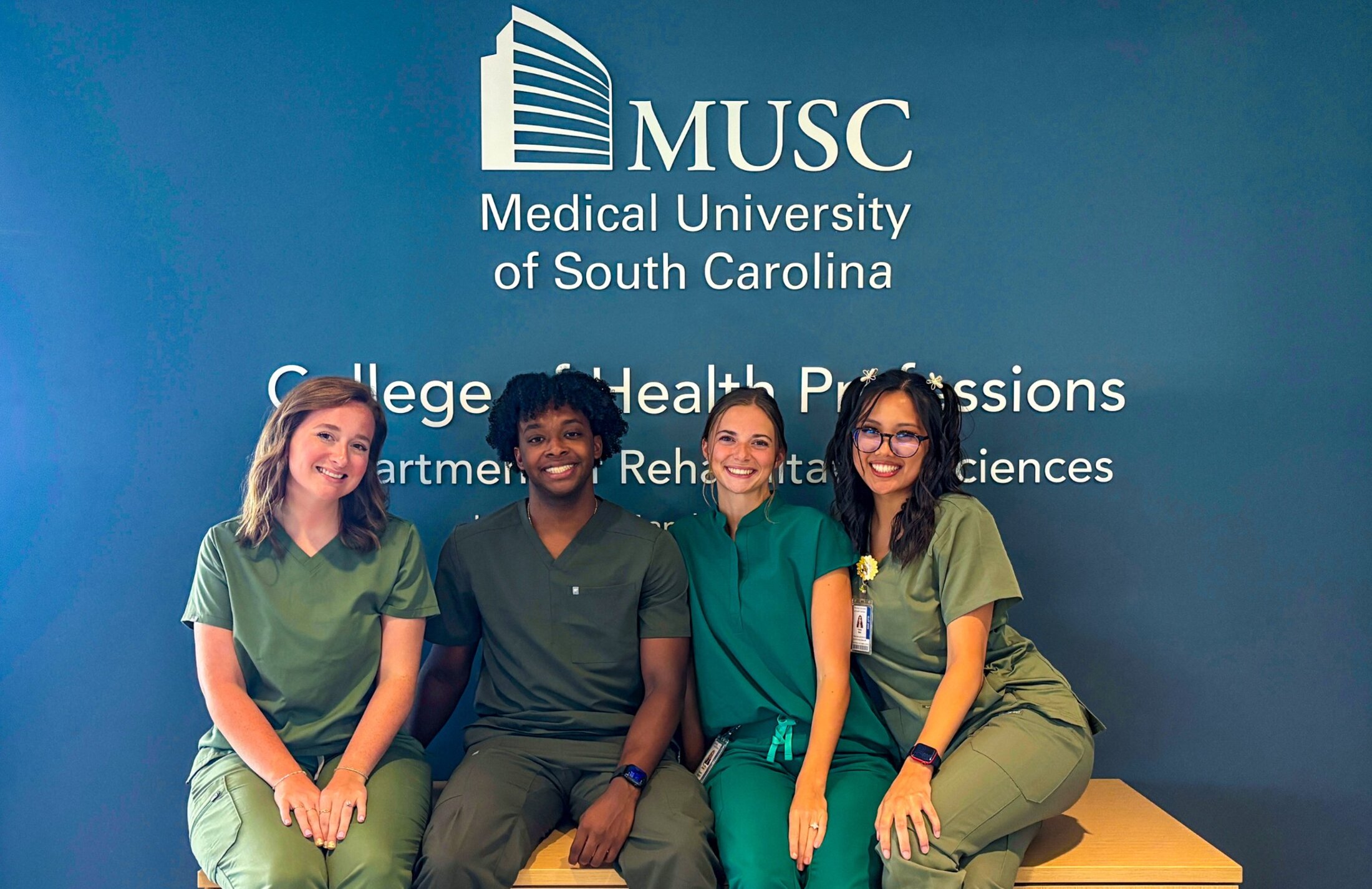
But don’t just take our word for it. We asked four current students to share what hybrid learning is really like.
Why I Chose MUSC's Hybrid OTD
There’s no one-size-fits-all reason students choose MUSC’s hybrid OTD. For Casey Bala, who had been previously enrolled in a residential DPT program, the hybrid format better suited her approach to coursework.
“The hybrid format has honestly exceeded what I hoped for. It gives me the independence and flexibility I need without making me feel like I am learning alone,” Bala said.
For Elise Yandle, the program’s accessibility allowed her the opportunity to continue working while staying close to her support system.
“In choosing the hybrid format, I have been able to continue working while in school and stay near the people who have been my biggest supporters,” Yandle shared.
For Casey Belcher, the hybrid format offered the freedom to pursue her passion for OT while continuing to serve her community. “The hybrid format was the perfect fit for me because it allowed me to pursue my passion for occupational therapy while continuing to serve my community. I love being able learn at my own pace and come to class ready to apply what I’ve learned.”
What Lab Immersions Are Really Like
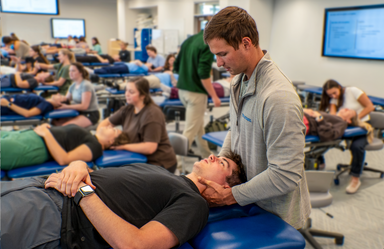
After building foundational knowledge online, students put it into practice during immersive lab experiences in Charleston, SC, traveling to campus six times per year for six- to 10-day sessions.
“My first lab immersion experience was fantastic,” Yandle said. “I got hands-on experience applying the concepts we had learned in our synchronous classes, with support from our amazing professors.”
For Belcher, immersion week was about more than developing clinical skills — it was a confidence boost.
“Throughout the week, light bulbs were going off one after another, and it was the first time I thought, ‘Wait ... I am smart. I am confident. I can do this.’”
For Thomas Brown, his first immersion helped connect the dots between online coursework and hands-on clinical practice.
“It helped me see the payoff from my hard work online translate into the physical classroom,” he said.
Throughout the week, light bulbs were going off one after another, and it was the first time I thought, ‘Wait ... I am smart. I am confident. I can do this.'
Building Connections Beyond the Screen
Learning online hasn’t gotten in the way of connection—in fact, students say it’s one of the most meaningful parts of the experience."There isn't a day that goes by where I'm not texting or FaceTiming someone from my cohort," Belcher said.
“I thought it would be difficult to build relationships with classmates and faculty due to our classes being held online rather than in person, but it has been quite the opposite,” shared Yandle.
For Bala, that sense of connection extends to faculty support—something that has exceeded her expectations.
“What surprised me most was how supported I could feel by people living miles away. The distance often makes our moments together feel even more intentional.”
Looking Ahead
For these students, the hybrid experience is about more than geographic flexibility. It’s helping them grow into the occupational therapists they aspire to become.“When I look back over this past year, I can truly see how much I have grown, not just in my knowledge, but in my confidence as an OT.” Belcher said.
Bala echoed that sentiment: “Each experience is helping me become the creative, compassionate and open-minded OT I am meant to be.”
While their paths to MUSC OTD are different, all four students share a common takeaway: hybrid learning has challenged them, supported them, and prepared them to become confident, compassionate occupational therapists.
Could MUSC’s Hybrid OTD be the right fit for you?
Explore how personalized support, immersive learning experiences, and hands-on practice come together to prepare future occupational therapists.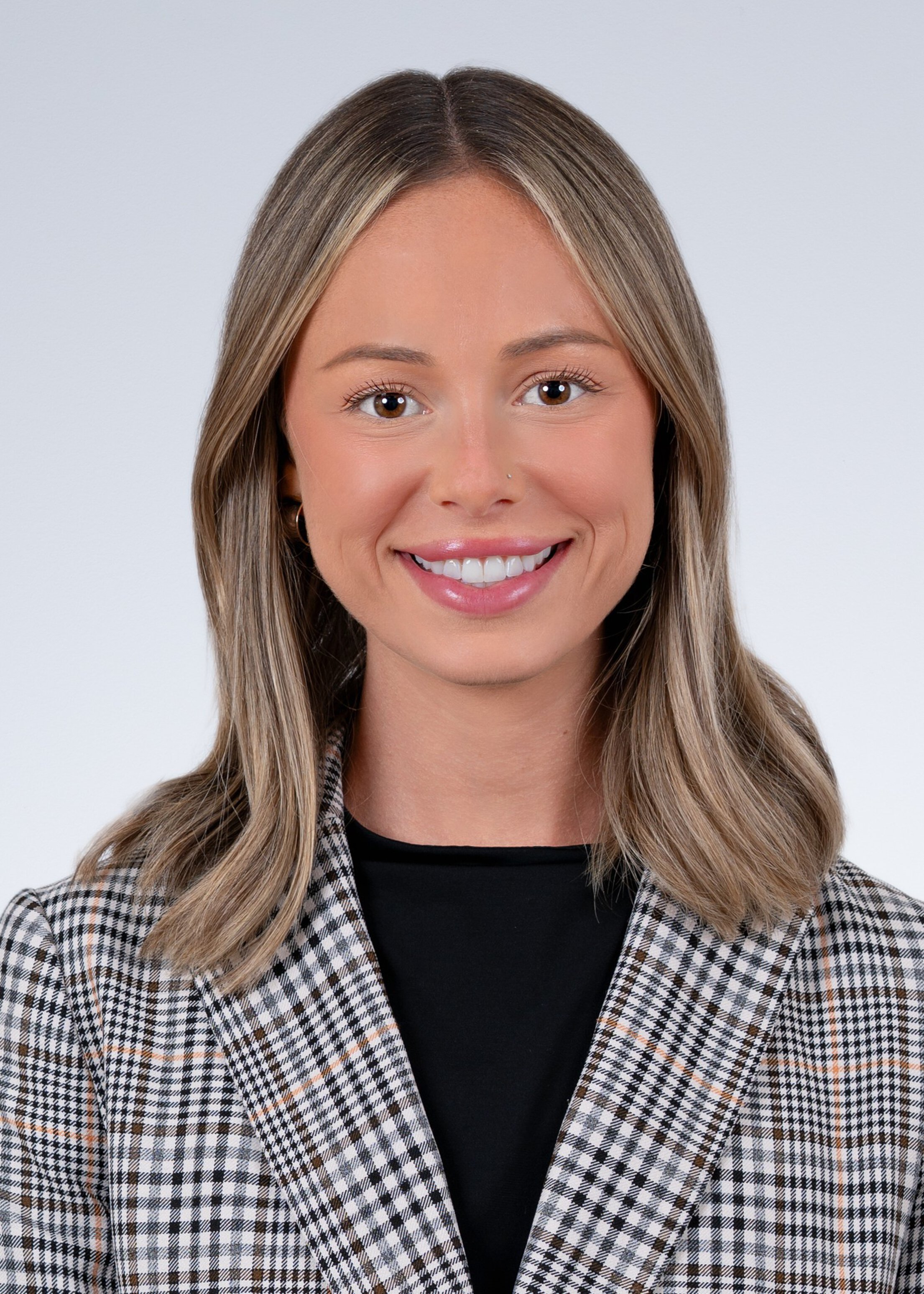
Katie Ennis
Recent College of Health Professions stories