


The degree is more than a credential. It is an opportunity to deepen your expertise, broaden your perspective, connect with other leaders and position yourself to help shape the future of healthcare.
Leading in a changing healthcare landscape
Healthcare leadership and education have always been central to my career. My experiences across clinical practice, higher education, healthcare systems and innovative startup environments have shaped an approach to leadership grounded in science, data, collaboration and strategic direction.I believe embracing change is essential to effective leadership, especially in an ever evolving field like healthcare. Leaders must be prepared to adapt while remaining focused on patient-centered care and data-informed decision-making.
Over the next several years, healthcare leaders will face challenges related to workforce shortages, digital transformation, artificial intelligence, changing policies, financial pressures, and emerging health challenges. Success will require leaders who are agile, strategic and prepared to guide organizations through uncertainty.
Meeting these challenges will take more than technical expertise. The next generation of healthcare leaders will need emotional intelligence, systems thinking and a commitment to lifelong learning. They must be able to build strong teams, foster innovation, and lead transformation with purpose and resilience.
A vision for the Doctor of Health Administration (DHA)
My vision for the DHA program at MUSC is to develop transformational leaders who can bridge scholarship and practice. I want students to gain the knowledge, confidence and leadership skills needed to address complex healthcare challenges and drive meaningful organizational change.The DHA is particularly valuable for working professionals because it allows them to immediately apply what they learn to real-world challenges. Students can strengthen their leadership capacity while making tangible contributions within their organizations. They don’t simply apply knowledge; they become knowledge creators themselves.
Expanding access to doctoral education
The fully online and hybrid formats make doctoral education accessible to healthcare professionals regardless of where they live or work. These flexible pathways allow students to continue advancing their careers while pursuing an advanced degree.
Our students and alumni bring rich and diverse experiences from across the healthcare continuum. They are supported by faculty whose teaching is grounded in both research and experience. That combination strengthens classroom discussions and creates an environment where theory and practice come together to address real healthcare challenges.
Looking ahead
I see change as an opportunity.What excites me most about the future of healthcare leadership is the opportunity to combine innovation, technology, and human-centered leadership to improve healthcare delivery and outcomes. Education plays a critical role in preparing leaders to navigate this evolving landscape.
I hope prospective students see the DHA as an opportunity to expand their influence, strengthen their leadership skills, and create meaningful impact within their organizations and communities. Healthcare needs leaders who are willing to think strategically, lead courageously and drive positive change.
If I could share one message with someone considering a DHA, it would be this: The degree is more than a credential. It is an opportunity to deepen your expertise, broaden your perspective, connect with other leaders and position yourself to help shape the future of healthcare.
Meet the Author

Gouri Gupte
Director and Associate Professor, Division of Doctor of Health Administration
Recent College of Health Professions stories

College of Health Professions + Education
AI as a thought partner: Reimagining nurse anesthesia education at MUSC

College of Health Professions + Department of Healthcare Leadership and Management
What the next generation of healthcare quality and safety leaders needs
College of Health Professions + Department of Clinical Sciences
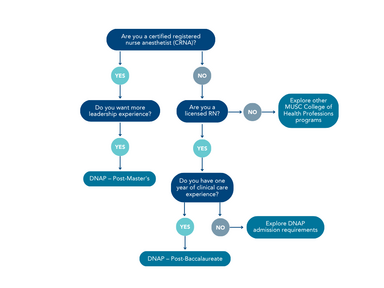
Find your path to a Doctor of Nurse Anesthesia Practice