
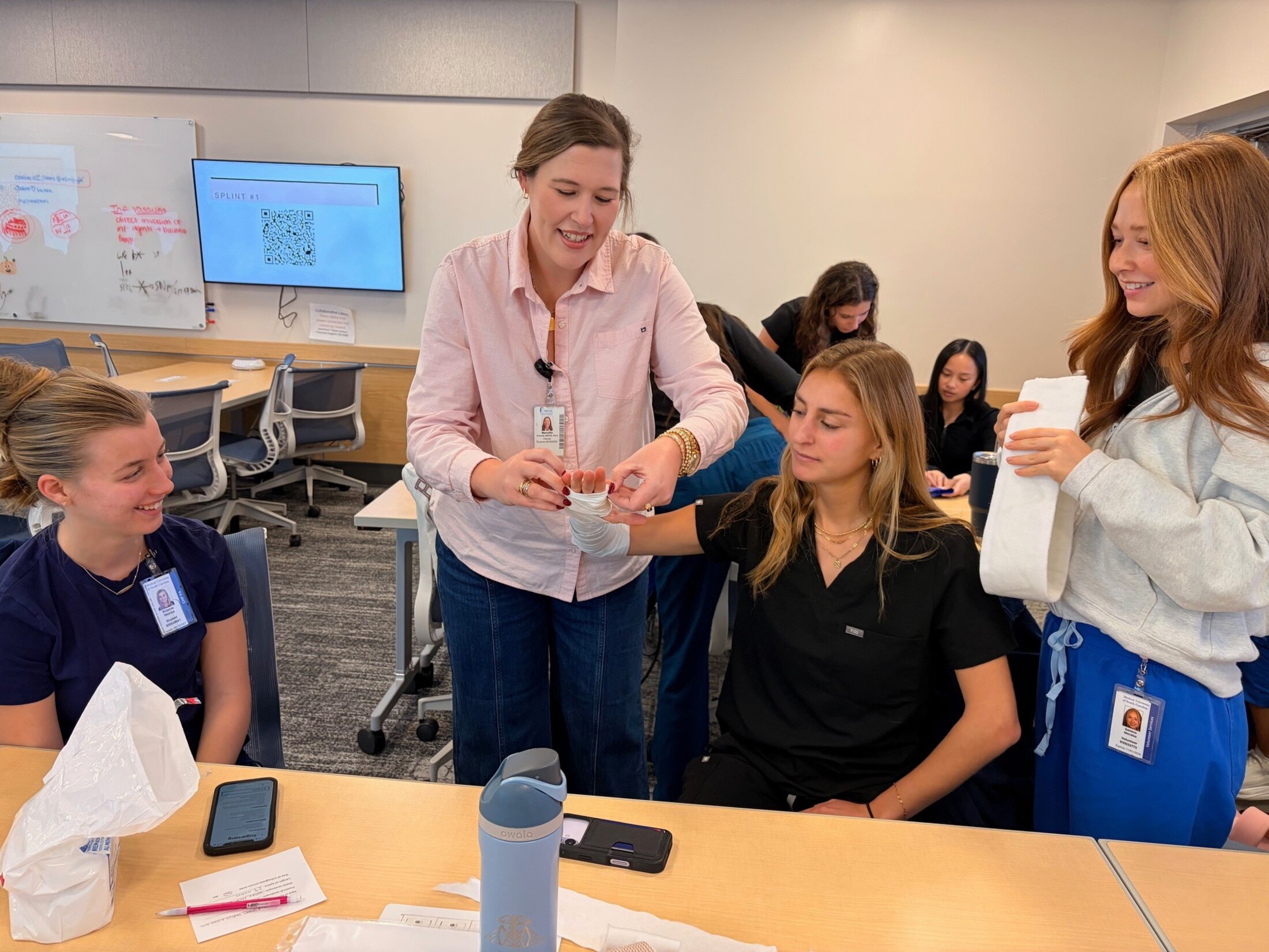
For Meredith Provost, DMSc, MSPAS, PA-C, teaching future physician assistants (PAs) is an opportunity to bring the realities of patient care directly into the classroom. As an assistant professor and director of student success in MUSC’s Division of Physician Assistant Studies and a practicing PA specializing in emergency medicine, she draws on more than a decade of clinical experience to guide her teaching.
A 2012 graduate of MUSC's Master of Science in Physician Assistant Studies (MSPAS) program, Provost has spent most of her career in emergency medicine. Today, she remains actively engaged in patient care through her continued work in the emergency department, along with a weekly clinic day at the Federal Law Enforcement Training Center. Staying in practice keeps her connected to the evolving challenges of patient care and gives her current clinical experiences to draw from in the classroom.
Clinical practice gives me real experiences to connect to what we're discussing in class. I can bring in examples of clinical reasoning, communication, teamwork and ethical decisions.
"Clinical practice gives me real experiences to connect to what we're discussing in class," Provost said. "I can bring in examples of clinical reasoning, communication, teamwork and ethical decisions."
One lesson she returns to often is the value of approaching every patient with curiosity and an open mind. In the emergency department, patients sometimes arrive with a presumed diagnosis or a history of being evaluated for the same symptoms. Provost uses these situations to push students to look beyond earlier conclusions, listen carefully and build their own clinical judgment.
She encourages students to ask, “What supports this diagnosis, and what doesn’t fit?” The question reinforces critical thinking and reminds future PAs that good patient care requires more than recognizing textbook symptoms.
For MUSC MSPAS students, learning from actively practicing clinicians helps connect what they learn in the classroom with the realities of caring for patients. Through clinical examples and classroom discussion, Provost encourages students to think beyond finding the right answer and consider how they would communicate a plan, demonstrate compassion and recognize when to ask for help.
For Provost, clinical practice and teaching continually inform one another. Each keeps her learning, and as an MUSC graduate herself, helping prepare the next generation of PAs makes that connection especially meaningful.
Real patients, real decisions, real-world teaching. Discover how MUSC’s MSPAS faculty prepare the next generation of physician assistants.

Katie Ennis
Recent College of Health Professions stories