
The Stroke Recovery Research Center (SRRC) at the Medical University of South Carolina (MUSC) is expanding opportunities for stroke survivors to participate in research aimed at improving recovery and quality of life.
Supported by a National Institutes of Health (NIH) grant to develop a Center for Biomedical Research Excellence (COBRE) in Stroke Recovery, the center currently supports more than 20 active studies exploring different aspects of recovery after stroke. From improving mobility to addressing emotional health challenges, researchers are working to better understand how the brain heals and how new therapies can help accelerate that process.
For some participants, involvement in research has also provided new insight into their own recovery journey.
Barbara Herbruck, a U.S. Navy veteran who has participated in SRRC research since 2017, said the experience has helped her better understand the challenges she faces following stroke and how to continue working toward improvement.
"I would recommend research to others. I have been learning more about my limitations, how I’ve not been using my arm [that was affected by stroke] and how I can use that arm more!"
Many of the studies focus on the brain’s ability to adapt and reorganize after injury, known as brain plasticity. By examining how rehabilitation, exercise, technology, and non-invasive brain stimulation influence recovery, researchers hope to develop therapies that restore function and help stroke survivors regain independence.
The challenge helps to push me more than I thought I could ever do. I’m not a quitter, and I take the challenge.
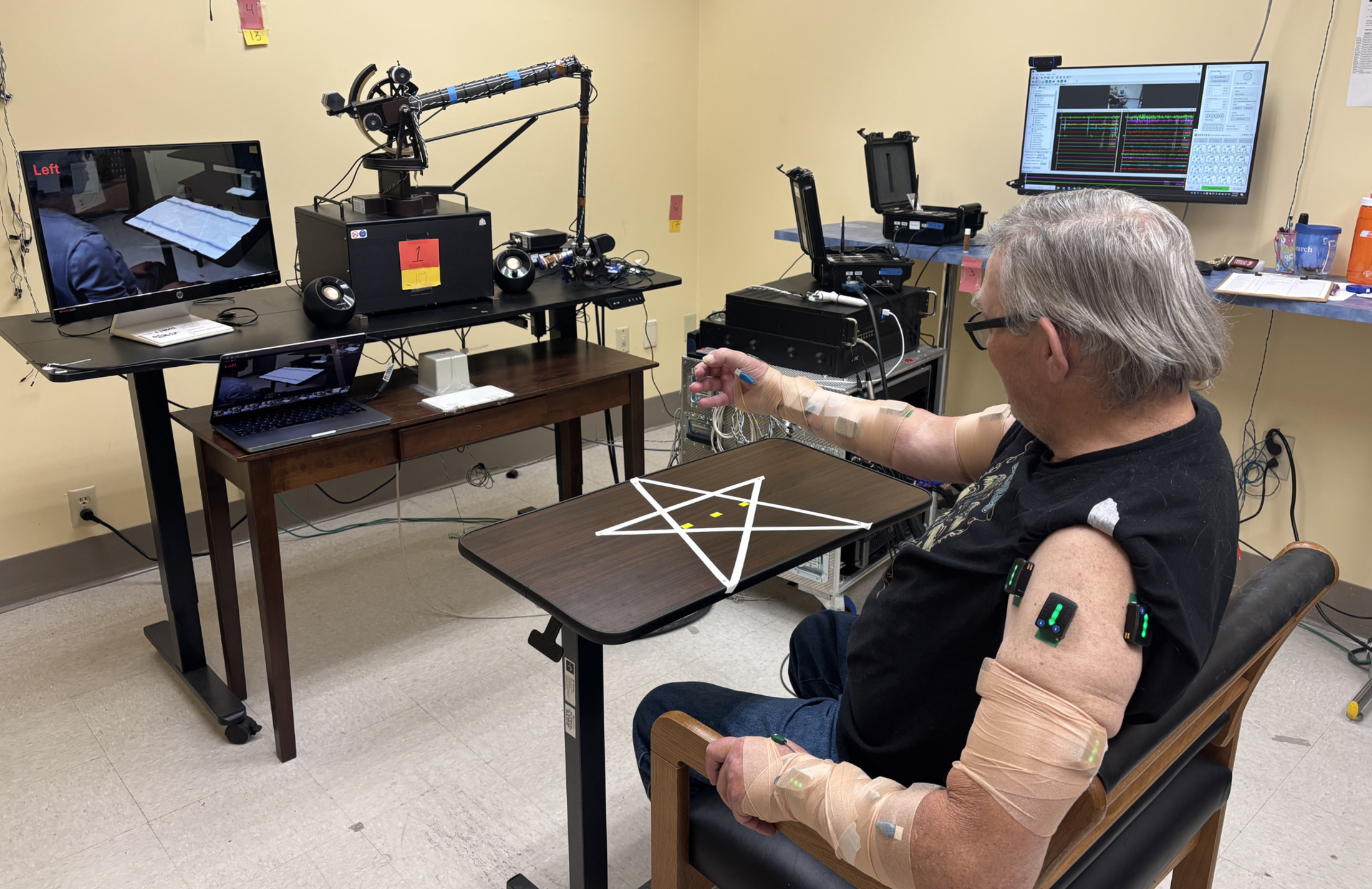
Current studies explore a wide range of recovery needs. One project is testing whether specialized video games and targeted exercises can improve arm movement and coordination. Other studies are investigating whether non-invasive brain stimulation, combined with exercise or other therapies, can help address depression or apathy following stroke. Additional research examines telerehabilitation programs that pair occupational or speech therapy with strategies to support emotional wellness, while another looks at how weight management and exercise programs may influence physical recovery and daily participation.
For many participants, the research environment itself can be motivating.
Frank Gardner, a U.S. Army veteran who has participated in SRRC research since 2022, has taken part in nine studies and says the experience continually motivates him to progress in his recovery.
"When I come here, it’s almost like a challenge to me,” Gardner said. “The challenge helps to push me more than I thought I could ever do. I’m not a quitter, and I take the challenge. Thank you to the people who have worked with me, encouraged me, and pushed me to put in the work."
Both in-person and virtual study options are available, making participation accessible to a wide range of stroke survivors. Participants also have the opportunity to join the center’s research recruitment registry that matches interested individuals with studies suited to their unique recovery needs.
Join the SRRC in Changing What’s Possible
With more than 20 active studies underway, the Stroke Recovery Research Center (SRRC) continues to explore new ways to support stroke recovery.Contact Us:
Stroke Recovery Research Center
77 President Street, CHP Building 3, CMSC 700
Charleston, SC 29425
Phone: 843-792-1589
Email: stroke-recovery@musc.edu
Stroke survivors, caregivers, and those interested in learning more about the center’s research are encouraged to explore current studies and opportunities to get involved.Learn more about the center’s research and opportunities to participate:
Katie Ennis
Recent College of Health Professions stories