
Each May, National Speech-Language-Hearing Month (NSLHM) serves as a time to celebrate the powerful role speech-language pathologists (SLPs) play in supporting communication, connection, and quality of life. At the Medical University of South Carolina (MUSC), that impact begins early through the MS in Speech-Language Pathology program, where students engage in hands-on, interdisciplinary training from their very first semester, preparing them to deliver high-quality, family-centered care across the full scope of practice.
Among opportunities for clinical preparation and training is Project SPARKLE (Pre-Service Preparation for Allied Health Related Professions Acquiring Knowledge and Leadership Skills in Early Childhood), a $1.25 million U.S. Department of Education-funded initiative designed to address the growing need for skilled professionals in early intervention.
Bringing together students in speech-language pathology, occupational therapy and physical therapy, the program equips future clinicians to serve infants, toddlers and preschoolers with complex needs through collaborative, community-based care.
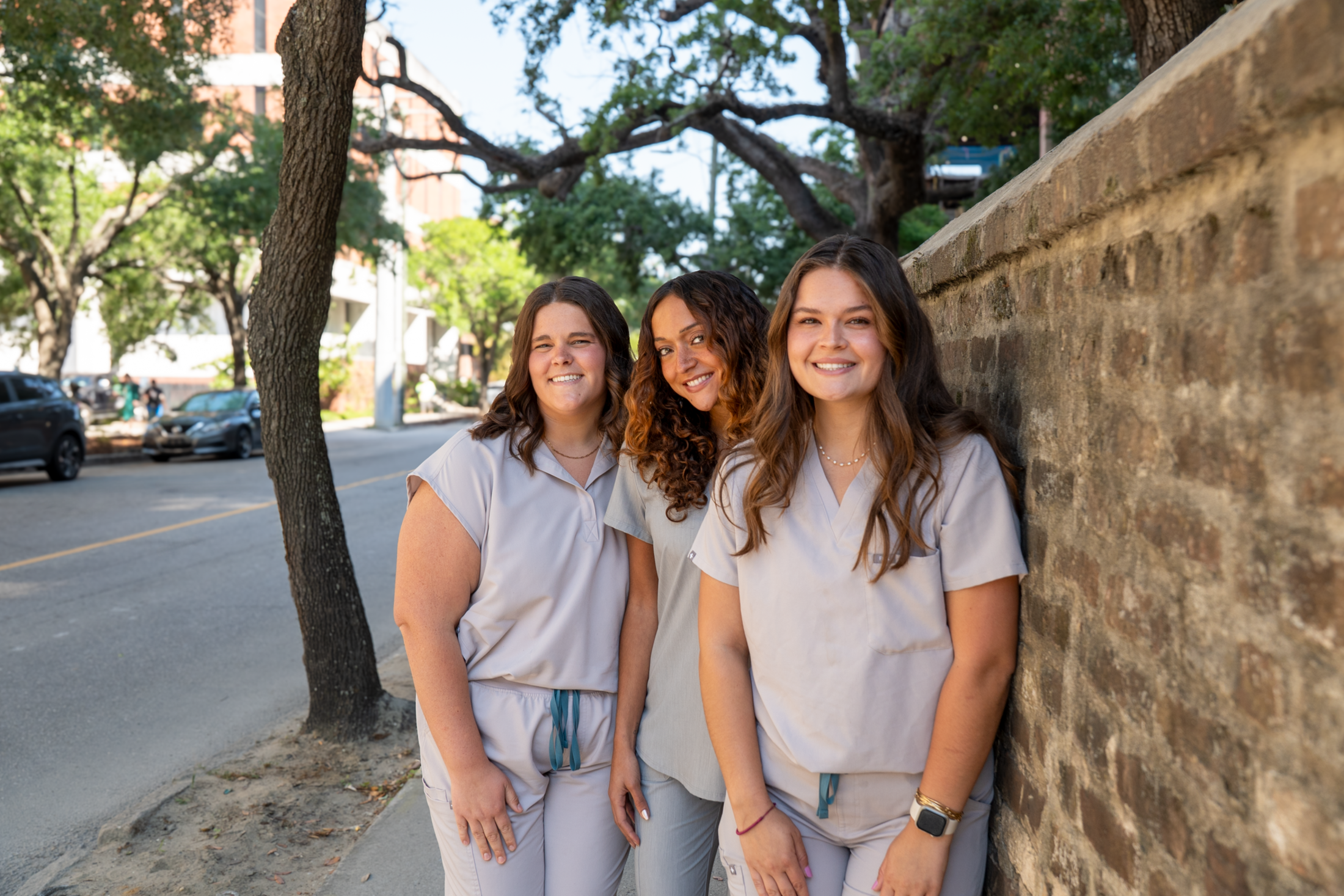
For SLP students like Kailey Lastinger, Project SPARKLE has expanded her understanding of what it truly means to be a speech-language pathologist in early childhood rehabilitation. Through specialized coursework and training, she’s developed a more holistic view of the children and families she will one day serve.
“It’s helped me realize that our speech-language specific skills are just one piece of our role,” she said. “SLPs in early intervention need to be strong advocates and effective educators, because families are relying on us for both.”
That perspective comes to life through Project SPARKLE’s emphasis on hands-on experiences. Through evidence-based early literacy training, Lastinger and her peers apply what they’ve learned in real time at local daycares, with the benefit of support and feedback from faculty and classmates. Just as impactful has been the opportunity to learn alongside MUSC OTD and DPT students, building confidence in interprofessional collaboration and an appreciation for the teamwork required to best serve patients.
SLP student Joy Sabet believes the program has reshaped how she views early intervention at its core.
“It’s about far more than treatment strategies,” she said. “It’s about understanding the child in the context of their family, culture, development and lived experience.”
That shift has deepened her perspective on the role of SLP in pediatric rehabilitation, where communication is closely tied to relationships, emotional development and participation in everyday life. Through Project SPARKLE, she’s also learned that meaningful care requires flexibility and collaboration, often requiring adaptation to each child’s needs to support progress beyond the therapy setting.
Beyond direct patient experience, one of the most impactful aspects of Project SPARKLE has been learning from peers.
Understanding my cohort’s lived experiences and their personal ‘why’ has deepened my empathy and better prepared me to be a well-rounded clinician.
That shared learning has helped shape a more reflective, person-centered approach to care that recognizes how each child’s unique experiences influence their development. For Vaught, it’s also reinforced the importance of interdisciplinary teamwork when supporting children with complex communication needs.
Experiences like Project SPARKLE are essential in preparing future clinicians to bridge the gap between classroom learning and real-world practice. By embedding students in collaborative, community-based early intervention experiences, the program strengthens their ability to think beyond discipline-specific silos and instead revolve care around the whole child and family. They are not only refining clinical techniques but also developing the perspective, humility, and leadership needed to serve the next generation of children in early intervention settings.
Ultimately, Project SPARKLE underscores a simple but powerful truth: effective speech-language pathology in early childhood is not done in isolation. It lives at the intersection of communication, development, family systems, and interprofessional care. In celebrating National Speech-Language-Hearing Month, it serves as a reminder that the work of a speech-language pathologist is far from ‘invisible’ and is not just about helping children find their voice. It’s about building the environments, relationships, and understanding that allow that voice to be heard.
2026 Project SPARKLE Scholars:
Speech-Language Pathology
Kailey Lastinger
Joy Sabet
Anna Grace Vaught
Occupational Therapy
Amaya Bailey
Dominique Black
Katelyn Nardone
Physical Therapy
Damien George
Grant Robinson
Sarah Schemer
Katie Ennis
Recent College of Health Professions stories