

Master in Health Administration
book_2 Learning Mode: Hybrid
Program Overview
The CAHME-accredited Master in Health Administration (MHA) Hybrid program at MUSC prepares emerging and advancing healthcare leaders through a flexible blend of online coursework and in-person learning experiences. Ideal for recent graduates and working professionals, this healthcare administration degree builds expertise in leadership, finance, operations, quality improvement, strategy, and digital health. Students benefit from face-to-face engagement, executive-level faculty, and access to MUSC’s academic health system while developing skills in data-driven decision-making and AI in healthcare. Graduate ready to lead innovation across health systems and beyond.
Application Timeline
Spring 2027
Opens: July 1, 2026
Final deadline: Dec. 2, 2026
Summer 2027
Opens: July 1, 2026
Final deadline: April 7, 2027
Fall 2027
Opens: July 1, 2026
Final deadline: July 28, 2027
Ranked
#19
health care management program
U.S. News & World Report, 2026
100%
post-graduation employment rate
As reported by the Commission on Accreditation of Healthcare Management Education (CAHME) for the year 2023-24.
100%
retention rate
As reported by the Commission on Accreditation of Healthcare Management Education (CAHME) for the year 2023-24.
100%
of graduates would choose MUSC's MHA program again
As reported by the Commission on Accreditation of Healthcare Management Education (CAHME) for the year 2023-24.
Success you can measure
These numbers showcase what sets MUSC’s MHA program apart: national reputation, measurable results and career impact in health care management.
Learning Experience
A blended format that pairs weekly on‑campus engagement with online convenience, ideal for learners seeking structure, connection, and immersive, hands‑on leadership development.
Inside the Program
The MUSC Master in Health Administration (MHA) is a CAHME‑accredited graduate program that develops transformational, evidence‑driven health care leaders. Designed for early‑ and mid‑career professionals, it offers an accessible, affordable, and flexible pathway to advanced leadership education.
Students build core competencies in leadership, finance, operations, quality, strategy, and digital health, applying learning directly to real‑world challenges. The MHA follows one standardized, CAHME‑accredited curriculum delivered in two formats, online and hybrid. All students complete the same coursework, learn from the same expert faculty, and achieve the same outcomes.
Grounded in MUSC’s mission, the program emphasizes applied, competency‑based learning and predictable pacing. As part of the ACHE Higher Education Network, it aligns with national standards for health care management education.
Students also develop the skills to understand and lead the responsible use of artificial intelligence (AI) and data‑informed tools in health care settings. With support from faculty, professional networks, and access to MUSC’s health system and research enterprise, graduates are prepared to drive innovation, strengthen health systems, and help shape the future health care workforce in South Carolina and beyond.
At a Glance
- Format: Hybrid (In-person Mondays + Online)
- Course Length: 7-week accelerated courses
- Enrollment: Rolling (three starts per year)
The hybrid MHA blends the energy of weekly on‑campus class meetings with the convenience of online coursework. This structure supports steady academic progress while giving students regular opportunities to connect with faculty and classmates.
During weekly in‑person sessions, students participate in:
- Live case discussions
- Scenario‑based activities
- Team‑based projects and presentations
- Interactive problem‑solving grounded in real healthcare challenges
Between class meetings, structured online coursework reinforces key concepts and prepares students for the next on‑campus session.
Students deepen competencies across leadership, finance, operations, quality, strategy, and digital health while learning from faculty who bring real‑world health care administration experience to the classroom. The format appeals to learners who value structure, accountability, and human connection, but still benefit from partial online flexibility.
Throughout the program, hybrid students also explore data analytics, performance measurement, and AI‑enabled tools transforming healthcare operations and strategy.
Leadership Identity Development
Weekly on‑campus engagement creates natural opportunities to practice and refine leadership presence. Through discussion, presentation, and group work, students strengthen strategic communication, team collaboration, and decision‑making in complex environments.
Faculty feedback and peer interaction help students develop their personal leadership style and influence.
Community & Connection
The hybrid MHA fosters a supportive learning environment centered around meaningful human interaction. Weekly in‑person sessions allow students to build relationships with classmates, faculty, and health care leaders.
These connections often grow into professional networks, mentorship relationships, and long‑term partnerships that support ongoing career growth.
Why choose MUSC’s hybrid MHA?
- Weekly on‑campus sessions that strengthen connection and hands‑on learning
- CAHME‑accredited curriculum taught by expert, practice‑experienced faculty
- Access to MUSC Health and Charleston’s rich health care ecosystem
- Real‑world projects that build confidence and leadership readiness
- Predictable pacing designed to support working professionals
Curriculum
Standard
The standard hybrid Master in Health Administration curriculum consists of 49 credits and is designed to be completed in eight semesters. Below is the standard plan of study outlining the structured progression of coursework as you advance through the program.
Year 1, Semester 1
| Course ID | Course Title | Credits |
|---|---|---|
| HAP600 | Introduction to Healthcare Administration |
1 |
| HAP737 | Organization Theory & Behavior | 3 |
| Semester Total | 4 | |
Year 1, Semester 2
| Course ID | Course Title | Credits |
|---|---|---|
| HAP721 | Health Care Delivery Systems | 3 |
| HAP704 |
Health Policy | 3 |
| Semester Total | 6 | |
Year 1, Semester 3
| Course ID | Course Title | Credits |
|---|---|---|
| HAP710 | Managing Healthcare Operations, Quality, & Projects | 3 |
| HAP746 | Strategic Management & Marketing | 3 |
| Semester Total | 6 | |
Year 2, Semester 1
| Course ID | Course Title | Credits |
|---|---|---|
| HAP740 | Human Resource Management | 3 |
| HAP712 | Quantitative Methods & Evidence-Based Design in Healthcare | 3 |
| Semester Total | 6 | |
Year 2, Semester 2
| Course ID | Course Title | Credits |
|---|---|---|
| HAP726 | Financial Management for Healthcare Organizations I | 3 |
| HAP705 | Health Economics | 3 |
| Semester Total | 6 | |
Year 2, Semester 3
| Course ID | Course Title | Credits |
|---|---|---|
| HAP729 | Financial Management for Healthcare Organizations II | 3 |
| HAP724 | Epidemiology, Population Health, & Quality | 3 |
| Semester Total | 6 | |
Year 3, Semester 1
| Course ID | Course Title | Credits |
|---|---|---|
| HAP735 | Health Law & Risk Management | 3 |
| HAP750 | Digital Transformation in Healthcare | 3 |
| Semester Total | 6 | |
Year 3, Semester 2
| Course ID | Course Title | Credits |
|---|---|---|
| HAP790 | Healthcare Administration Capstone | 3 |
| HAP795 | Healthcare Administration Practicum | 6 |
| Semester Total | 9 | |
| Curriculum Total | 49 | |
Accelerated
The standard hybrid Master in Health Administration curriculum consists of 49 credits and is designed to be completed in five semesters. Below is the accelerated plan of study outlining the structured progression of coursework as you advance through the program.
Year 1, Semester 1
| Course ID | Course Title | Credits |
|---|---|---|
| HAP600 | Introduction to Healthcare Administration |
1 |
| HAP737 | Organization Theory & Behavior |
3 |
| HAP721 | Health Care Delivery Systems |
3 |
| HAP704 | Health Policy |
3 |
| Semester Total | 10 | |
Year 1, Semester 2
| Course ID | Course Title | Credits |
|---|---|---|
| HAP710 | Managing Healthcare Operations, Quality, & Projects | 3 |
| HAP746 | Strategic Management & Marketing |
3 |
| HAP740 | Human Resource Management |
3 |
| HAP712 | Quantitative Methods and Evidence-Based Design in Healthcare |
3 |
| Semester Total | 12 | |
Year 1, Semester 3
| Course ID | Course Title | Credits |
|---|---|---|
| HAP726 | Financial Management for Healthcare Organizations I | 3 |
| HAP705 | Health Economics | 3 |
| HAP729 |
Financial Management for Healthcare Organizations II | 3 |
| HAP724 | Epidemiology, Population Health, & Quality | 3 |
| Semester Total | 12 | |
Year 2, Semester 1
| Course ID | Course Title | Credits |
|---|---|---|
| HAP735 | Health Law & Risk Management | 3 |
| HAP750 | Digital Transformation in Healthcare | 3 |
| HAP790 | Healthcare Administration Capstone | 3 |
| Semester Total | 9 | |
Year 2, Semester 2
| Course ID | Course Title | Credits |
|---|---|---|
| HAP795 | Healthcare Administration Practicum | 6 |
| Semester Total |
6 | |
| Curriculum Total | 49 | |
Experiential Learning
Students in the hybrid MHA students benefit directly from Charleston’s vibrant health care ecosystem. The Healthcare Administration Practicum (HAP 795) allows them to apply program competencies within real organizations, including MUSC Health and regional partners.
Common practicum experiences include:
- Operational and process improvement initiatives
- Quality and patient safety projects
- Strategic planning and business development efforts
- Population health and community‑focused initiatives
Students with substantial prior health care administration or leadership experience may qualify to waive the practicum, reducing total program requirements to 43 credit hours.
Whether completed or waived, the practicum ensures that all hybrid students demonstrate real‑world competence and professional readiness.
Join a virtual information session
Join us to learn more about the program's curriculum, admissions requirements, application process, and what sets MUSC apart from other universities.
Your path to admission
Discover key information about application steps and required documentation to help you move forward with confidence.
Eligibility Requirements
All applicants must:
- Possess a bachelor’s degree from a regionally accredited institution in the U.S. or its equivalent from a foreign institution.
- Demonstrate a strong overall academic record with a GPA of 3.0 or higher on a 4.0 scale in coursework relevant to the proposed area of graduate study. Applicants with a GPA below a 3.0 are welcome to apply and are encouraged to supplement their application through the submission of the optional personal essay and resume.
Minimum Abilities
At MUSC, we actively support all students to ensure their success in both academic and clinical settings. To support this goal, the university outlines the essential qualities and functional abilities required for participation in its educational programs. These include a range of observational, communication, motor, intellectual and behavioral skills necessary for safe and effective practice.
Application Process
The MUSC Office of Admissions receives and processes all application materials. Once your application is complete, the Master in Health Administration Program will be notified. The following process outlines how and when your materials will be reviewed.
- Complete the MUSC application.
- Have official transcripts sent from all degree-bearing institutions, as well as any in which completion of a degree is currently in progress.
- Once all materials have been received and verified, your application will be reviewed. Applicants are typically notified of their application evaluation and admissions decision within two weeks of all application materials being received.
Note: All application materials must be received to be considered for admission to the program. Incomplete applications will not be considered. It is the applicant's responsibility to regularly review the progress of their application in the Applicant Portal and ensure that all application materials, including all official transcripts are received by the application deadline.
Application Requirements
- MUSC Application: All applicants must submit an MUSC application. Apply Now
- Optional Materials: Applicants are encouraged to provide the following supplemental materials with their application if their GPA is below 3.0. After application submission, return to the application portal and upload.
- Resume
- Personal Essay
- Official TOEFL scores: TOEFL scores are required if English is not the applicant's native language, and they have not studied within the United States. Scores may be waived if prior degree(s) were earned in the US.
International Applicants
MUSC’s MHA degree program is unable to admit international students requiring an F-1 visa. Applications will only be accepted from U.S. citizens, permanent residents, or those holding other valid nonimmigrant visa classifications that allow participation in lawful study while in the United States.
Please contact the MHA Student Services Coordinator, Mia Bradley, at bradlmia@musc.edu should you need clarification or have any questions about your eligibility.
Why MUSC is the right choice
MHA students choose MUSC for unmatched academic support, personalized advising, and a collaborative learning community built on healthcare excellence.

Explore the MUSC College of Health Professions

How MUSC MHA mentorship propelled alumni success
Funding your path forward
Explore scholarships, financial aid options and institutional resources designed to support your educational investment with confidence.
Tuition & Fees
Tuition and fees listed below apply to the 2026-27 academic year and are per semester unless otherwise noted.
| Fee Type | Fee |
|---|---|
| Application Fee (per application) | $100 |
| Matriculation Fee (upon applicant acceptance) | $500 |
Full-Time
| Tuition/Fee Type | Fall | Spring | Summer |
|---|---|---|---|
| In-State Tuition (per credit hour) | $705 | $705 | $705 |
| Out-of-State Tuition (per credit hour) | $705 | $705 | $705 |
Cost of Attendance
The Cost of Attendance, or COA, estimates the total educational expenses for an enrollment period. The information below reflects the 2026-27 academic year. The COA includes direct costs, such as tuition and fees, billed by the university, as well as indirect costs you may need to plan for, including housing, food, transportation, books and other personal expenses.
The COA helps determine the maximum amount a student may borrow in an academic year and supports funding-related determinations, such as grants, scholarships, loans and others.
Your actual expenses may be lower than the COA, especially with careful budgeting. MUSC's Office of Student Financial Literacy can help you create a budget that supports your education, personal needs and long-term financial goals.
Standard
Fall Start
| Item | Year 1 | Year 2 | Year 3 | Est. Total |
|---|---|---|---|---|
| Direct Costs | ||||
| In-State Tuition | $11,280 | $12,690 | $10,575 | $34,545 |
| Out-of-State Tuition | $11,280 | $12,690 | $10,575 | $34,545 |
| Health Insurance | $4,000 | $4,000 | $4,000 | $12,000 |
| Fees | - | - | - | - |
| In-State Total Direct Costs | $15,280 | $16,690 | $14,575 | $46,545 |
| Out-of-State Total Direct Costs | $15,280 | $16,690 | $14,575 | $46,545 |
| Indirect Costs | ||||
| Living Expenses (Food and Housing) | $21,144 | $27,144 | $18,096 | $66,384 |
| Miscellaneous Personal Expenses | $2,880 | $2,880 | $1,920 | $7,680 |
| Transportation | $3,240 | $3,240 | $2,160 | $8,640 |
| Books, Course Materials, Supplies and Equipment | $2,585 | $2,410 | $1,885 | $6,880 |
| Total Indirect Costs | $29,849 | $35,674 | $24,061 | $89,584 |
| Estimated Total Costs | ||||
| In-State Total Costs | $45,129 | $52,364 | $38,636 | $136,129 |
| Out-of-State Total Costs | $45,129 | $52,364 | $38,636 | $136,129 |
Spring Start
| Item | Year 1 | Year 2 | Year 3 | Est. Total |
|---|---|---|---|---|
| Direct Costs | ||||
| In-State Tuition | $7,050 | $12,690 | $14,805 | $34,545 |
| Out-of-State Tuition | $7,050 | $12,690 | $14,805 | $34,545 |
| Health Insurance | $2,311 | $4,000 | $4,000 | $10,311 |
| Fees | - | - | - | - |
| In-State Total Direct Costs | $9,361 | $16,690 | $18,805 | $44,856 |
| Out-of-State Total Direct Costs | $9,361 | $16,690 | $18,805 | $44,856 |
| Indirect Costs | ||||
| Living Expenses (Food and Housing) | $15,834 | $27,144 | $27,144 | $70,122 |
| Miscellaneous Personal Expenses | $1,680 | $2,880 | $2,880 | $7,440 |
| Transportation | $1,890 | $3,240 | $3,240 | $8,370 |
| Books, Course Materials, Supplies and Equipment | $2,235 | $2,410 | $2,235 | $6,880 |
| Total Indirect Costs | $21,639 | $35,674 | $35,499 | $92,812 |
| Estimated Total Costs | ||||
| In-State Total Costs | $31,000 | $52,364 | $54,304 | $137,668 |
| Out-of-State Total Costs | $31,000 | $52,364 | $54,304 | $137,668 |
Summer Start
| Item | Year 1 | Year 2 | Year 3 | Est. Total |
|---|---|---|---|---|
| Direct Costs | ||||
| In-State Tuition | $14,762 | $12,690 | $10,575 | $38,027 |
| Out-of-State Tuition | $15,620 | $12,690 | $10,575 | $38,885 |
| Health Insurance | $5,045 | $4,000 | $1,689 | $10,734 |
| Fees | - | - | - | - |
| In-State Total Direct Costs | $19,807 | $16,690 | $12,264 | $48,761 |
| Out-of-State Total Direct Costs | $20,665 | $16,690 | $12,264 | $49,619 |
| Indirect Costs | ||||
| Living Expenses (Food and Housing) | $21,144 | $27,144 | $18,096 | $66,384 |
| Miscellaneous Personal Expenses | $2,880 | $2,880 | $1,920 | $7,680 |
| Transportation | $3,240 | $3,240 | $2,160 | $8,640 |
| Books, Course Materials, Supplies and Equipment | $2,585 | $2,410 | $1,710 | $6,705 |
| Total Indirect Costs | $29,849 | $35,674 | $23,886 | $89,409 |
| Estimated Total Costs | ||||
| In-State Total Costs | $49,656 | $52,364 | $36,150 | $138,170 |
| Out-of-State Total Costs | $50,514 | $52,364 | $36,150 | $139,028 |
Accelerated
Fall Start
| Item | Year 1 | Year 2 | Est. Total |
|---|---|---|---|
| Direct Costs | |||
| In-State Tuition | $23,970 | $10,575 | $34,545 |
| Out-of-State Tuition | $23,970 | $10,575 | $34,545 |
| Health Insurance | $4,000 | $4,000 | $8,000 |
| Fees | - | - | - |
| In-State Total Direct Costs | $27,970 | $14,575 | $42,545 |
| Out-of-State Total Direct Costs | $27,970 | $14,575 | $42,545 |
| Indirect Costs | |||
| Living Expenses (Food and Housing) | $27,144 | $18,096 | $45,240 |
| Miscellaneous Personal Expenses | $2,880 | $1,920 | $4,800 |
| Transportation | $3,240 | $2,160 | $5,400 |
| Books, Course Materials, Supplies and Equipment | $3,460 | $2,060 | $5,520 |
| Total Indirect Costs | $36,724 | $24,236 | $60,960 |
| Estimated Total Costs | |||
| In-State Total Costs | $64,694 | $38,811 | $103,505 |
| Out-of-State Total Costs | $64,694 | $38,811 | $103,505 |
Spring Start
| Item | Year 1 | Year 2 | Est. Total |
|---|---|---|---|
| Direct Costs | |||
| In-State Tuition | $15,510 | $19,035 | $34,545 |
| Out-of-State Tuition | $15,510 | $19,035 | $34,545 |
| Health Insurance | $2,311 | $4,000 | $6,311 |
| Fees | - | - | - |
| In-State Total Direct Costs | $17,821 | $23,035 | $40,856 |
| Out-of-State Total Direct Costs | $17,821 | $23,035 | $40,856 |
| Indirect Costs | |||
| Living Expenses (Food and Housing) | $15,834 | $27,144 | $42,978 |
| Miscellaneous Personal Expenses | $1,680 | $2,880 | $4,560 |
| Transportation | $1,890 | $3,240 | $5,130 |
| Books, Course Materials, Supplies and Equipment | $2,760 | $2,760 | $5,520 |
| Total Indirect Costs | $22,164 | $36,024 | $58,188 |
| Estimated Total Costs | |||
| In-State Total Costs | $39,985 | $59,059 | $99,044 |
| Out-of-State Total Costs | $39,985 | $59,059 | $99,044 |
Summer Start
| Item | Year 1 | Year 2 | Est. Total |
|---|---|---|---|
| Direct Costs | |||
| In-State Tuition | $23,222 | $10,575 | $33,797 |
| Out-of-State Tuition | $24,080 | $10,575 | $34,655 |
| Health Insurance | $5,045 | $1,689 | $6,734 |
| Fees | - | - | - |
| In-State Total Direct Costs | $28,267 | $12,264 | $40,531 |
| Out-of-State Total Direct Costs | $29,125 | $12,264 | $41,389 |
| Indirect Costs | |||
| Living Expenses (Food and Housing) | $27,144 | $18,096 | $45,240 |
| Miscellaneous Personal Expenses | $2,880 | $1,920 | $4,800 |
| Transportation | $3,240 | $2,160 | $5,400 |
| Books, Course Materials, Supplies and Equipment | $3,460 | $2,060 | $5,520 |
| Total Indirect Costs | $36,724 | $24,236 | $60,960 |
| Estimated Total Costs | |||
| In-State Total Costs | $64,991 | $36,500 | $101,491 |
| Out-of-State Total Costs | $65,849 | $36,500 | $102,349 |
Scholarships & Aid
MUSC offers scholarships for which you may be eligible. Some are awarded based on academic achievement; others are awarded based on community service, for example. However, the majority of scholarships awarded at MUSC are based on financial need. This means that these scholarships are only awarded to students who need some financial assistance to cover the cost of tuition and fees. If you would like to be considered for a financial need-based scholarship, you must have an up-to-date Free Application for Federal Student Aid (FAFSA) on file. Make sure you list the Medical University of South Carolina on your FAFSA form, along with MUSC's code: 003438. We encourage you to submit your FAFSA as early as possible. It is recommended to submit your FAFSA in January if you plan to enroll in the fall.
Career Outlook

Driving change in health care
MHA graduates advance into leadership roles across health care, shaping policy, managing operations and improving quality and patient outcomes.
Student Outcome Data
Our graduates consistently achieve high employment and board exam success, backed by a strong foundation in health administration principles.
Graduation Rates
Visit our CAHME program profile to learn more about the graduation rate, median time to graduation and more for our program.
Employment Rates
Visit our CAHME program profile to learn more about post-graduation employment for our program.
Career Outlook
Source: National Center for O*NET Development. (2025). O*NET Online. Retrieved July 26, 2026, from https://www.onetonline.org.
Program Faculty

Paige Powell, DrPH, Ph.D., MHA, BPS
Director, Division of Master in Health Administration - Hybrid

Eric Richardson, Ph.D., MBA, MPH, PHR
Chair and Professor, Department of Healthcare Leadership & Management
Eric Richardson, Ph.D., MBA, MPH, PHR, SHRM-CP, CHHR, FACHDM, is the chair and professor of the Department of Healthcare Leadership and Management in the College of Health Professions at the Medical University of South Carolina (MUSC).
Dr. Richardson is a higher education leader with more than two decades of experience teaching and developing curricula for traditional and online learning environments, with a focus on innovative and applied learning. His scholarly interests center on artificial intelligence, competency-based education, innovative online learning design, and the creation of connective and personalized learning environments. He holds a Doctor of Philosophy in Organization and Management with a concentration in Human Resource Management, a Master of Business Administration, and a Master of Public Health in Health Promotion, as well as graduate certificates in health administration and human resource management. In addition to his academic achievements, Dr. Richardson is a Certified in Healthcare Human Resources (CHHR) professional, a Society for Human Resource Management Certified Professional (SHRM-CP), and a Professional in Human Resources (PHR). Collectively, these academic and professional credentials provide a robust interdisciplinary foundation that bridges business, public health, and workforce leadership, informing his approach to innovative curriculum design and organizational development in healthcare education.
Dr. Richardson has been recognized nationally for excellence in teaching, service, and innovation. He received the 2023 Academy of Management Health Care Management Division Excellence in Teaching Award, the 2022 Association of University Programs in Health Administration (AUPHA) Faculty Service Award, and the 2019-2020 University of North Carolina Wilmington Excellence in eLearning Award. In 2018, he became a Commission on Accreditation for Healthcare Management Education (CAHME) Fellow, later achieving the distinction of CAHME Certified Fellow in 2025, and was also inducted as a Fellow of the American College of Health Data Management (FACHDM) that same year.
An active contributor to the profession, Dr. Richardson has served as chair of the national Education and Learning Committee for the American Society for Healthcare Human Resources Administration (ASHHRA) and as forum chair for the Association of University Programs in Health Administration (AUPHA) Distance Learning Faculty Forum. He currently serves on editorial board of the Journal of Health Administration Education (JHAE) and is a regular contributor to HR Pulse Magazine. He maintains active membership and leadership involvement in the Academy of Management and the Society for Human Resource Management.
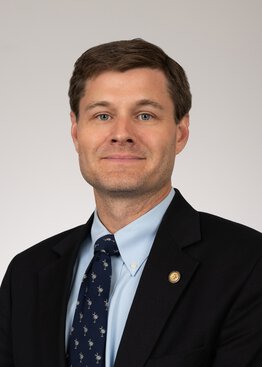
Dunc Williams, Ph.D., MHA
Associate Professor, Department of Healthcare Leadership & Management
Frequently Asked Questions
Learning Experience & Professional Development
Either a Master of Healthcare Administration (MHA) or a Master of Business Administration (MBA) can lead to a world of possibilities for your career. Students with an interest in health care may have a tough time deciding which degree will best prepare them for a career path that addresses their unique skills and interests.
An MBA is designed to give students an extensive overview of the business world. The main difference between an MBA and an MHA is that an MBA provides students with a broader understanding of general business practices rather than those specific to the healthcare industry.
An MHA offers a specific curriculum focused on business as it relates to the healthcare industry. If you are contemplating a career as a health care administrator, an MHA will provide you with the specific knowledge, skills, and tools to succeed in this specialized industry.
The MHA curriculum is designed around program competencies that align with professional standards and health care organizational needs. Students develop skills in leadership, finance, operations, quality, strategy, and innovation, including the responsible use of data and artificial intelligence, to meet workforce demand.
Courses in the hybrid MHA program are delivered in an accelerated seven-week format with in-person classes held one day per week on Mondays. Students typically enroll in one to two courses at a time and may take up to four courses within a semester, depending on their desired pace and professional commitments.
In-person Monday sessions focus on applied learning, case discussion, faculty-led instruction, and peer collaboration. Outside of class, students engage in structured learning activities throughout the week, including readings, assignments, external engagement, and regular, substantive interaction (RSI) with faculty through the learning management system. This model combines the benefits of face-to-face learning with the flexibility needed by working professionals while maintaining academic rigor and consistent engagement.
Yes. MUSC’s MHA is a member of the American College of Healthcare Executives (ACHE) Higher Education Network, providing students access to national resources, networking, and professional development. In addition, students are encouraged to engage locally and nationally with leading professional organizations aligned with their career goals, such as Healthcare Information and Management Systems Society (HIMSS), Medical Group Management Association (MGMA), and other relevant industry organizations to support personalized professional growth.
Program Structure & Delivery
The Master in Health Administration (MHA) degree is offered in two intentionally designed delivery formats to meet students where they are in their professional and personal lives without compromising academic rigor, curriculum quality, or outcomes.
- Online (Asynchronous):
The online MHA is delivered fully online in seven-week courses, allowing students to engage with coursework on a flexible schedule. This format is designed to support both early-career professionals building foundational leadership skills and working professionals balancing full-time employment, family responsibilities, and career advancement. Asynchronous delivery enables students to learn at times that work best for them while maintaining consistent academic momentum.
- Hybrid:
The hybrid MHA format features in-person classes held one day per week on Mondays, delivered in seven-week courses. This structure is intentionally designed to maximize access and minimize disruption for students who value face-to-face engagement while maintaining professional commitments. Monday-only classes allow students to plan their work schedules predictably, avoid mid-week disruptions, and benefit from sustained interaction, applied discussion, and direct real-time faculty engagement.
Both formats are structured to be accessible, predictable, and supportive of working adults, allowing students to progress through the program at a pace aligned with their career stage and personal circumstances.
Importantly, both delivery formats share the same curriculum, faculty, and program learning outcomes. Students earn the same CAHME-accredited MHA degree regardless of format, ensuring academic equivalency while offering flexibility in how the learning experience is delivered.
Yes. MHA courses are offered year-round, allowing students to maintain momentum and progress through the program at a pace that fits their schedule.
Courses are delivered in 7-week terms designed to allow focus and momentum. Multiple start dates are offered each year, enabling flexible progression.
Students typically enroll in one to two courses per seven-week period or two to four courses per semester, depending on their professional and personal commitments.
For a 3-credit course delivered over seven weeks, students should expect to spend approximately 15–20 hours per week engaging in course activities, including instruction, faculty interaction, readings, and assignments. The accelerated format concentrates engagement into a shorter timeframe while maintaining academic rigor and regular, substantive interaction with faculty and peers.
Yes. The program is structured so that students can balance professional and personal commitments while completing coursework, regardless of delivery format.
The practicum is well-suited for students seeking applied experience or exposure to new areas of health care administration. Students entering the program with relevant healthcare experience may be eligible for a practicum waiver, reducing the total credits required to complete the degree.
Career & Outcomes
Healthcare administration careers are growing rapidly. According to the U.S. Bureau of Labor Statistics, employment of Medical and Health Services Managers is projected to grow much faster than average for all occupations. Demand is driven by healthcare system expansion, regulatory complexity, workforce challenges, and value-based care initiatives.
Graduates of the MHA program are prepared for leadership and management roles across a wide range of healthcare settings, including hospitals and health systems, ambulatory care organizations, consulting firms, public health agencies, insurance and managed care organizations, and health technology enterprises. The curriculum builds competencies in leadership, operations, finance, strategy, quality, and data-informed decision making to support long-term career growth.
Nationally, the median annual salary for Medical and Health Services Managers exceeds $110,000, reflecting the high level of responsibility and expertise required in health care leadership roles.
In South Carolina, health care management professionals earn competitive wages across hospitals, outpatient centers, and community health organizations, with strong demand statewide.
MHA graduates pursue leadership roles in:
- Hospitals and integrated health systems
- Physician practices and ambulatory care organizations
- Public health and community-based organizations
- Health care consulting and advisory firms
- Insurance, managed care, and health technology companies
An MHA degree builds core competencies in:
- Strategic planning and healthcare finance
- Operations management and performance improvement
- Health policy and regulatory compliance
- Data analytics and responsible use of AI
- Organizational leadership and change management
Graduates are prepared to improve performance, lead innovation, and manage complex health care organizations nationwide.
South Carolina shows sustained demand for health care management professionals due to continued growth in health care delivery, population health initiatives, and system-level operational complexity. Graduates are well-positioned for leadership roles within the state while remaining competitive in the national job market.
Admissions & Application
No. The MHA program does not require GRE or GMAT scores as part of the application.
Applications are accepted on a rolling basis, and students are currently admitted into the program three (3) times each year.
Yes. The MHA program is generally eligible for employer tuition assistance and tuition remission, subject to employer and institutional policies. Students are encouraged to confirm eligibility with their employer and with the MHA Student Services Coordinator.
Prospective students begin the application through the MUSC Admissions portal. Admissions decisions are made on a rolling basis. Detailed application instructions, deadlines, and requirements are available through the MUSC Office of Enrollment Management.
Support & Next Steps
The CHP Student Recruitment team is available to help prospective and current students evaluate delivery formats, course pacing, and practicum options based on individual goals and experience.
For specific questions about admissions, curriculum, or advising, prospective students can contact the CHP Student Recruitment team directly at chp-recruit@musc.edu.

Living in Charleston
Charleston offers a unique blend of coastal beauty and modern convenience. With top-rated dining, scenic waterfronts and endless outdoor activities, the city offers an unmatched quality of life for residents, striking a balance between work and leisure.
Guided by purpose & principles
MUSC's values-driven program cultivates leaders who act with integrity, lead with purpose and devise solutions that enhance community health.
Program Learning Outcomes (PLOs)
Graduates of the Master in Health Administration (MHA) program will be able to:
- PLO 1. Evaluate healthcare data, trends, delivery models, and environmental factors to inform strategic and operational decisions that improve quality, access, and cost-effectiveness across the continuum of care.
- PLO 2. Analyze and interpret financial, operational, quality, and safety data—including key performance indicators and evidence-based benchmarks—to support evidence-based decision-making and continuous performance improvement.
- PLO 3. Assess internal and external environmental factors, including legal, ethical, economic, and regulatory considerations, that influence strategic management and policy direction within healthcare organizations.
- PLO 4. Develop innovative, evidence-based strategies to address organizational challenges, lead change management initiatives, and advance quality, access, and cost-effectiveness in healthcare delivery.
- PLO 5. Design and implement communication strategies that integrate evidence, adapt to varied stakeholder needs, and achieve intended organizational and leadership outcomes.
- PLO 6. Evaluate and apply emerging digital technologies—including data analytics and artificial intelligence tools—to enhance healthcare delivery, inform decision-making, and address associated ethical, organizational, and operational considerations.
- PLO 7. Demonstrate continuous self-awareness and professional growth through reflective practice, accurate self-assessment, incorporation of feedback, and alignment of ongoing development with long-term career goals.
Vision
The Master in Health Administration (MHA) program envisions a future in which healthcare leaders are prepared to change what’s possible in the management and delivery of health services. By anticipating the evolving needs of healthcare systems and the jobs of tomorrow, the program seeks to be a leader in preparing agile, innovative, and evidence-informed professionals who drive health transformation, strengthen organizations, and improve the health of communities in South Carolina and beyond.
This vision guides curriculum design, competency development, and learning experiences that prepare graduates for emerging leadership roles across evolving healthcare systems.
Mission
The Master in Health Administration (MHA) program develops transformational healthcare leaders who, grounded in evidence-based practice, strengthen the management and delivery of health services. We educate early- and mid-career professionals to lead across a wide range of healthcare organizations in South Carolina and beyond. Guided by our core values and in partnership with MUSC’s mission, we are committed to empowering healthy communities, driving innovation and health transformation, and reshaping the future healthcare workforce.
Values
At the core of our program, we are guided by a commitment to the following values that drive our mission:
- Compassion: We act with kindness, empathy and dignity.
- Collaboration: We achieve common goals through teamwork and partnerships.
- Innovation: We drive transformation by embracing new ideas, discoveries and practices.
- Integrity: We do the right thing and commit to accountability in words, actions and use of resources.
- Respect: We value everyone and their many perspectives to build trust and a sense of belonging.
Stories worth sharing
Stay connected with success stories of students, alumni and faculty driving health care forward through leadership, innovation and service.
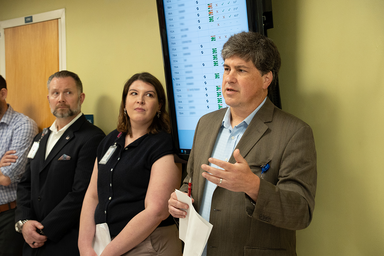
College of Health Professions + Division of Master of Science in Healthcare Quality and Safety
Fixing Things No One Asked Them to Fix: Why a Master’s in Healthcare Quality and Safety is Vital...
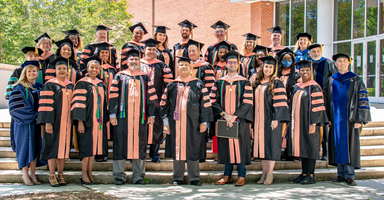
College of Health Professions + Department of Healthcare Leadership and Management
30 Years of Leadership: MUSC DHA Alumni Reflect on the Program That Shaped Their Careers

College of Health Professions + Department of Healthcare Leadership and Management
Why earn an MHA at MUSC: Online and hybrid options for healthcare leaders
Accreditation & Recognition
The Master in Health Administration program at the Medical University of South Carolina is accredited by the Commission on Accreditation of Healthcare Management Education (CAHME), the only organization recognized by the Council for Higher Education Accreditation (CHEA) to accredit individual academic programs offering professional master’s degrees in healthcare management. CAHME accreditation means that the program meets or exceeds nationally established standards for graduate education in healthcare leadership and management.
The MHA program’s CAHME accreditation profile, including graduation and employment rates, may be viewed here.