
The opportunity to meet a need on a broader scale to impact communities really sets the capstone student apart.
Occupational Therapy Doctorate (OTD) Capstone projects at the Medical University of South Carolina (MUSC) give doctoral students the tools they need to become leaders in their field of expertise. During this 14-week immersive experience, students have the opportunity to apply and develop new skills and knowledge in a mentored practice setting. “The capstone is a mutually beneficial collaborative relationship where the student gains advanced knowledge and skill sets to prepare them to become leaders and scholars,” said Joy Crawford, Doctoral Capstone Director and Assistant Professor, OTD, MSRS, OTR/L.
The collaborative component is key, as it’s shaping forward-thinking leaders through real-world experience.
“We’re looking at the needs of a community organization and how we can change the community through the capstone project development and that collaborative relationship and process,” said Crawford. “The opportunity to meet a need on a broader scale to impact communities really sets the capstone student apart.”
Throughout each capstone project, students must also be mindful of human and financial resources, environments, and opportunities at the community site. It’s a process that encourages sustainable planning while meeting the needs of the community.
How capstone projects are developed
In preparation for their projects, students have two semesters worth of capstone-focused coursework, which is where the project development process begins. During this time, they are partnered with an organization within their desired specialty field and begin their assessment.
The assessment phase teaches students to identify organizational needs, rank by urgency, and select based on one of eight project focus areas indicated in the accreditation body: clinical practice, research, leadership, program development, policy development, advocacy, education, and administration.
“This experience that has enriched the OT learning journey will prepare them to be that forward-thinker, problem solver, identifier, and facilitator,” said Crawford. “Instead of looking at a problem from maybe one or two or even three angles, they’re looking at such multifaceted angles and also looking for answers that may not be present, so they’re going outside of the box to find those answers.”
In the implementation phase, students have the opportunity to develop their project through an immersive experience. Not only do they get to see their project in motion within the organization, they also evaluate the effectiveness and how the organization is responding, and whether the project does or doesn’t meet the outlined needs of the organization and community.
Throughout this phase, students can modify their project for sustainability and effectiveness, further encouraging forward-thinking leaders who identify needs and evaluate proposed solutions with an open mind.
Once complete, each student disseminates the results with their peers, faculty, and the organization stakeholders.
“Even if a student does not determine that they want to move in leadership roles, it can certainly impact them from a scholarship perspective, and also in their ability to mentor co-workers, to identify problems and needs,” said Crawford. “Their level of awareness and seeing the rehab and OT world from a very holistic perspective will impact them clinically.”
Creating forward-thinking leaders and advocates
By the time students complete their dissemination, they have gained real-world practice that integrates their knowledge and skills with local needs. It’s an experience that encourages them to practice using the tools needed to become an advocate for their communities, whether or not they choose a leadership role within their career.
“I hope that the journey from capstone course day one to the final defense, that that student, that emerging practitioner, sees the world through a very broad lens and determines that they will be that person who makes the difference, who is the difference, who is the voice of those who don’t have a voice,” said Crawford. “The capstone projects prepare them to do all of those things.”
Learn more about MUSC’s Occupational Therapy Doctorate - Residential program and capstone:
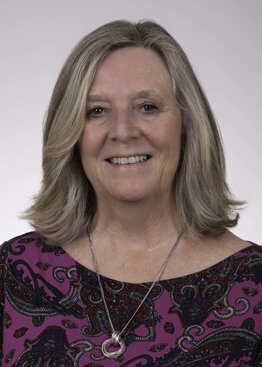
Joy Crawford, OTD, MSRS, OTR/L

Samantha Paternoster
Recent College of Health Professions stories