
A defining feature of the Ph.D. in Health and Rehabilitation Science program at the Medical University of South Carolina (MUSC) is the mentor-match process. Before applying, prospective students identify and connect with a faculty member whose research interests align with their own and who would be willing to serve as their primary mentor if admitted.
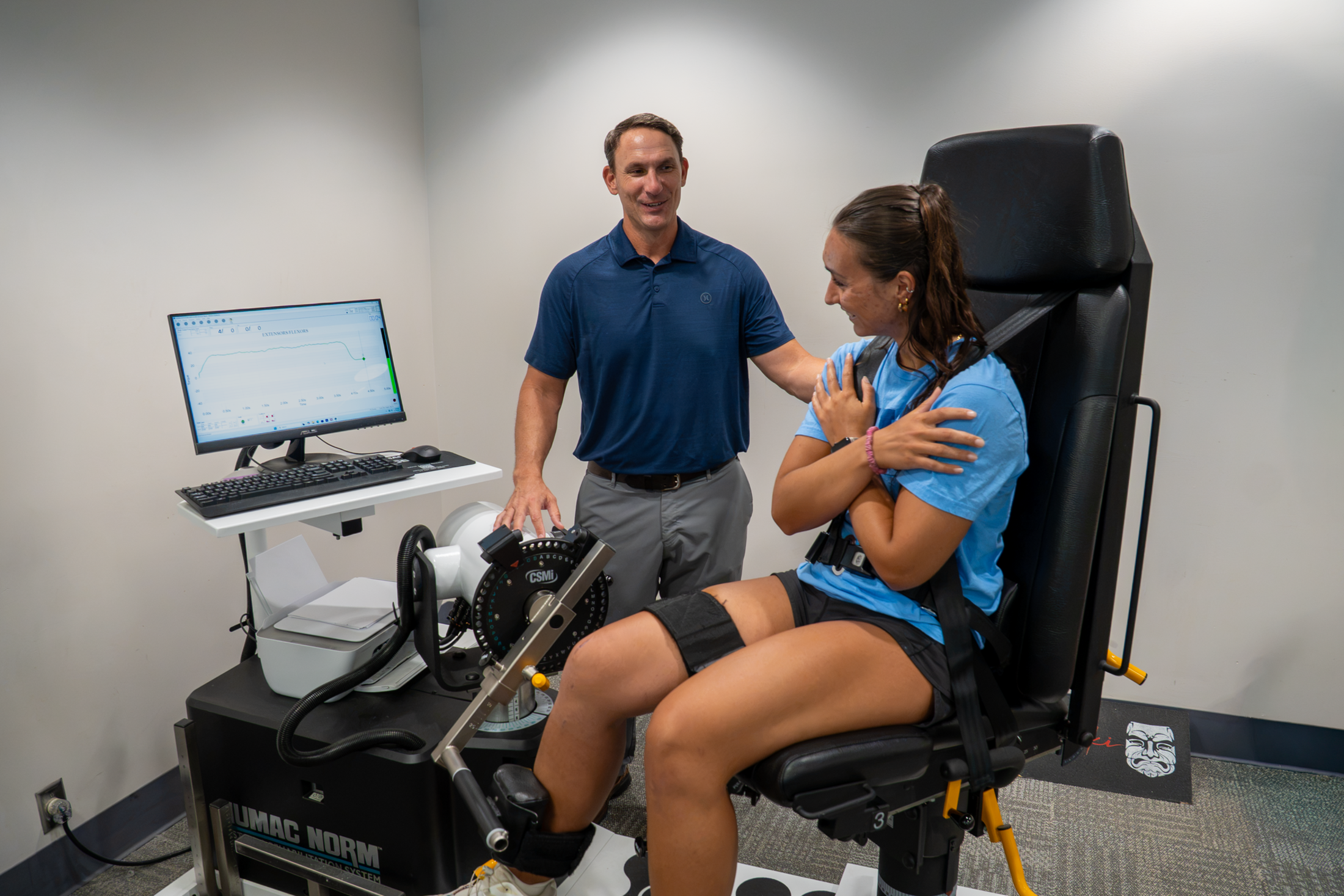
Many faculty mentors recruit doctoral students to join active, funded research programs. Among them is Ryan Zarzycki, PT, Ph.D., whose research examines how traumatic knee injuries affect movement, muscle performance and long-term recovery.
Learn more about Dr. Zarzycki's research, his approach to mentorship, and what one selected Ph.D. student can expect from joining his lab.
1. What is the focus of your research?
"My research focuses on understanding the neuromuscular mechanisms that contribute to persistent muscle weakness and abnormal movement following traumatic knee injuries, particularly ACL reconstruction. We combine neuroscience, biomechanics and rehabilitation science to better understand how the brain and nervous system influence movement and recovery."
2. How would you describe this opportunity to prospective students?
"This is an opportunity to join an interdisciplinary research program at the intersection of neuroscience, biomechanics and sports rehabilitation. Students gain hands-on experience designing and conducting human subjects research while working with advanced technologies to study movement, muscle function and brain activity."
3. What types of students are the best fit for this position?
"We are looking for motivated, curious and collaborative students who enjoy solving clinical problems through research. Students from physical therapy, athletic training, exercise science, kinesiology, biomedical engineering, neuroscience and related fields are encouraged to apply. Prior research experience is beneficial but not required."
4. What makes this funded position unique?
"This position offers guaranteed funding for four years, providing students with the stability to fully engage in their doctoral training while developing as independent researchers. Students also benefit from interdisciplinary collaboration, mentorship in scientific writing and grant development, and opportunities to prepare fellowship applications and pursue extramural funding."
5. What do you find most rewarding about mentoring doctoral students?
"One of the most rewarding aspects of mentoring is watching students grow into independent scientists. It's especially meaningful to see trainees present their work, publish their findings and recognize the potential impact their research can have on patient care."
6. How does the mentor–match process work for interested applicants?
"I encourage prospective students to reach out so we can discuss their research interests, career goals, and determine whether my lab is the right fit. I value a collaborative mentoring approach and work closely with each student to develop a research plan that aligns with their interests while providing broad training in clinical and translational rehabilitation research. Students in my lab also benefit from collaborating with faculty, clinicians and trainees across MUSC."
Prospective Ph.D. applicants interested in Dr. Zarzycki’s research should first contact the CHP Student Recruitment team at chp-recruit@musc.edu. The team will provide guidance on the program and admissions process and coordinate the next steps in the mentor-match process.
For students interested in advancing rehabilitation science through interdisciplinary research, this opportunity offers a pathway to meaningful discovery, collaboration and impact.
Learn more about the Ph.D. in Health and Rehabilitation Science at MUSC.
Recent College of Health Professions stories