
The mentor–match process is a central component of the Ph.D. admissions process and is intentionally individualized for each applicant.
For Ph.D. in Health and Rehabilitation Science students, the doctoral journey takes shape long before their first class or research project. At the Medical University of South Carolina (MUSC), it begins with finding the right faculty mentor.
In a program designed to prepare interdisciplinary leaders in research, education, and health policy, mentorship forms the foundation of the College of Health Professions’ graduate research training. Through a highly personalized mentor–match process, students take an active role in identifying MUSC faculty whose expertise aligns with their interests—ensuring a strong fit from the very start.
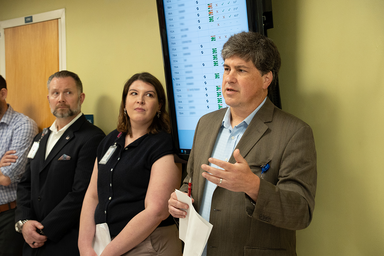
“The mentor–match process is a central component of the Ph.D. admissions process and is intentionally individualized for each applicant,” noted program director Sara Knox, Ph.D. “Establishing a strong mentor match at the start of the program is critical as it helps position students on a clear and supportive path toward research productivity and successful degree completion.”
While some students are recruited directly by faculty and others enter with a specific mentor in mind, many rely on the program’s guidance to navigate the process. They explore research areas, make connections, and build relationships that shape their doctoral journey. For students like Cory Winkler and Kira Palmer, those early connections made all the difference.
Winkler’s path to mentorship began before she even applied to the program. During a summer internship through the U.S. Department of Veterans Affairs (VA), she found herself immersed in stroke rehabilitation research, an area she had long been passionate about yet unable to directly pursue. That experience led her to connect with Chris Gregory, Ph.D., PT, and Catherine VanDerwerker, PT, DPT, Ph.D., her now primary mentors in the Ph.D. program, whose work immediately resonated with her interests.
Now in her first year of the program, Winkler’s research focuses on stroke rehabilitation and post-stroke depression. She is actively involved in multiple lab projects, from exploring transcranial magnetic stimulation and exercise to developing strength-training and weight-loss protocols for chronic stroke patients. Beyond the research connections, however, Winkler values the encouragement her mentors provide. “I think what drew me to my mentors was how willing they were to give me advice, guidance, and support even before I joined the program,” she said. For Winkler, the mentor–match process provided not only direction but also a foundation of mentorship that will carry on throughout her career.
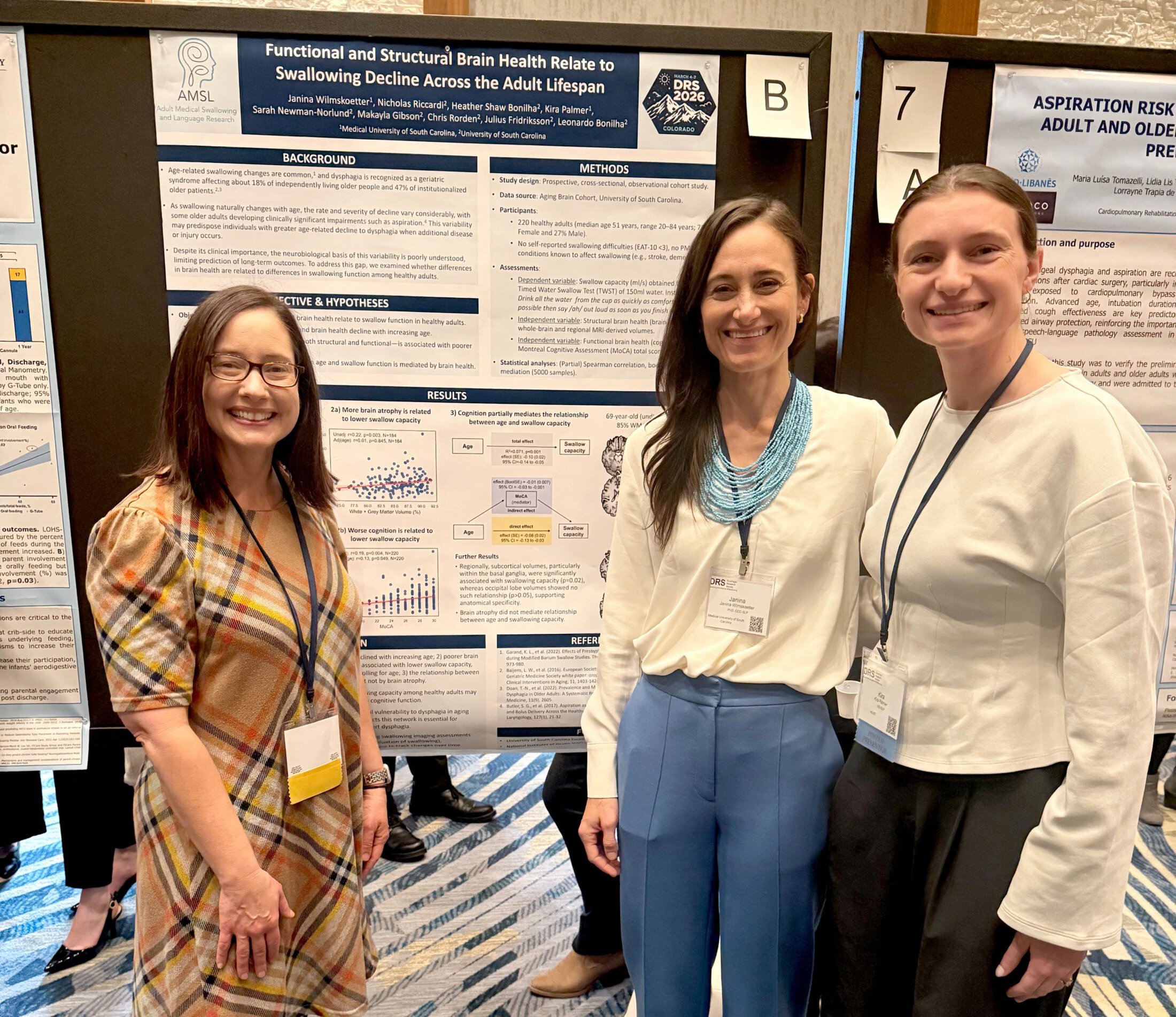
Palmer’s journey to finding her mentor followed a different, but equally intentional, path. With a strong interest in human swallow function and dysphagia (particularly in stroke and aging populations), she sought out faculty whose specialty aligned with hers. That search led her to Janina Wilmskoetter, Ph.D., CCC-SLP, whose numerous publications on neuroanatomical correlates of dysphagia and aphasia (language difficulties) after stroke closely matched Palmer’s desired research focus. Connecting with Wilmskoetter at a 2024 conference helped solidify her decision.
Now, Palmer is contributing to an R01-funded project examining how lesion location in the brain correlates with dysphagia symptoms and is helping develop a study focused on swallowing changes in older adults. For Palmer, the mentor–match process was about more than shared research interests—it was about ensuring the right long-term fit and building a supportive foundation for her doctoral training.
Together, these experiences reflect the strength of a process designed to be both structured and flexible, one that empowers students to explore their interests while building meaningful, lasting mentorships. By prioritizing alignment, connection and early collaboration, MUSC’s Ph.D. in Health and Rehabilitation Science program ensures that students don’t just enter with a plan—they begin with a partner in their success.
The right mentorship can shape your entire doctoral experience. Discover how the Ph.D. in Health and Rehabilitation Science program at MUSC helps you build those connections from day one.
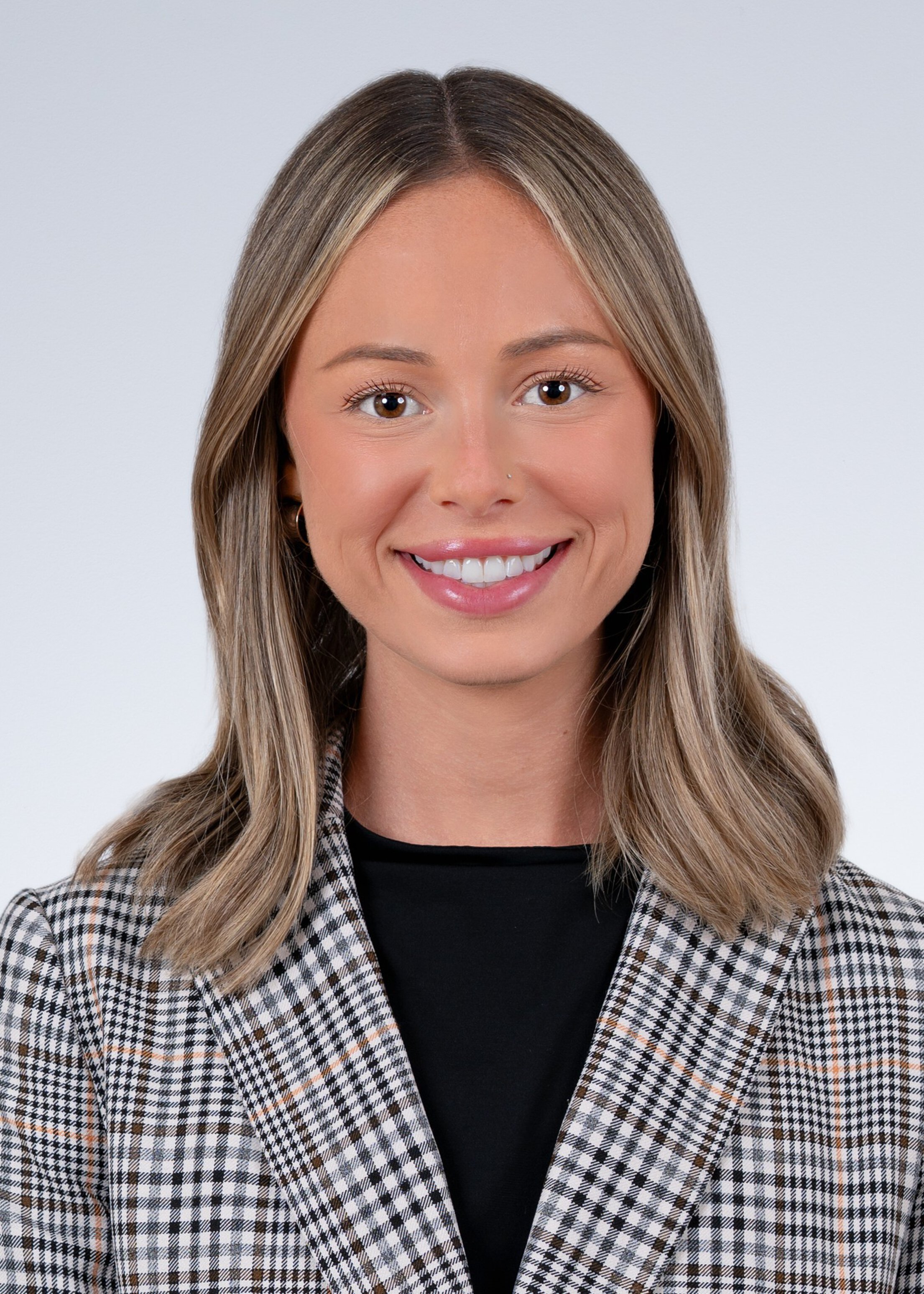
Katie Ennis
Recent College of Health Professions stories