

College of Health Professions
College of Health Professions Campus Tour
- calendar_today Monday, Oct. 12, 2026

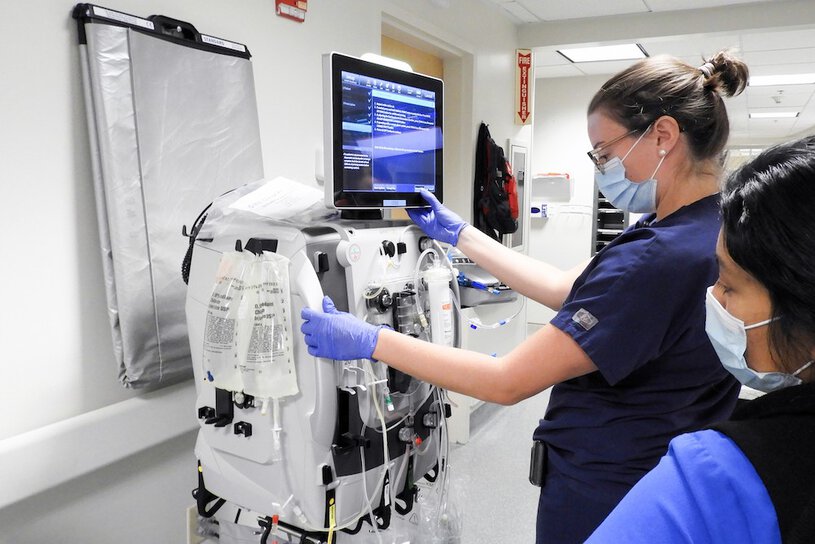
The online Master of Science in Extracorporeal Science (MS-ECS) at MUSC builds the cognitive knowledge and applied understanding of extracorporeal technology for a global audience. During the program, flexible, asynchronous courses cover perfusion theory, including heart-lung bypass, ECMO, VADs, and perioperative blood management, and prepare graduates with the didactic foundation to work in settings that provide cardiopulmonary life support. Clinical experience is gained through local employment. Designed for entry-level and practicing perfusionists outside the U.S., plus allied health and research professionals seeking didactic education in ECMO and ventricular assist technologies, such as biomedical engineers, nurses, and respiratory therapists not requiring direct hands-on clinical experience.
Fall 2027
Opens: Sept. 15, 2026
Final deadline: July 28, 2027
Advance your expertise through a flexible, fully online MS-ECS curriculum that blends on-demand coursework with interactive live sessions led by expert faculty committed to your success.
The Master of Science in Extracorporeal Science (MS-ECS) provides students with the cognitive knowledge and application of extracorporeal technology. The MS-ECS program is an online, distance-based curriculum aimed to meet the growing needs of the international perfusion and critical care communities. The curriculum is designed to serve global communities in the treatment of patients with advanced cardiovascular and pulmonary diseases using extracorporeal technology.
The MS-ECS program prepares its graduates with the required theoretical knowledge necessary to work as a clinical perfusionist in a variety of health care settings where cardiopulmonary life support services are required. Perfusionists are typically employed in cardiac surgical centers and operate the heart-lung machine during open heart surgery. They serve as experts in associated technologies such as ventricular assist devices (VADs), extracorporeal membrane oxygenation (ECMO) and are involved in all aspects of perioperative blood conservation and management. Clinical perfusionists are highly trained members of an open-heart surgery team. Extensive knowledge of anatomy, pharmacology, pathology, and surgical techniques are keys to success. Perfusionists often specialize in areas of pediatric perfusion or mechanical circulatory support devices.
The MS-ECS program delivers online asynchronous courses covering the theoretical foundations of perfusion science. The design of the program offers flexibility for working professionals by including 3 - 4 courses per semester.
The full-time Master of Science in Extracorporeal Science curriculum consists of 46 credits and is designed to be completed in five semesters. Below is the standard plan of study outlining the structured progression of coursework as you advance through the program.
| Course ID | Course Title | Credits |
|---|---|---|
| CVP700 | Clinical Monitoring | 3 |
| CVP702 | Perfusion Technology I | 3 |
| CVP718 | Pathophysiology | 5 |
| Semester Total | 11 | |
| Course ID | Course Title | Credits |
|---|---|---|
| CVP703 | Perfusion Technology II | 3 |
| CVP708 | Pathophysiology for Perfusion | 4 |
| CVP710 | Fundamentals of Clinical Acid | 1 |
| Semester Total | 8 | |
| Course ID | Course Title | Credits |
|---|---|---|
| CVP704 | Research Methodology | 3 |
| CVP714 | Cardiac Assist Devices | 2 |
| CVP731 | Extracorporeal Life Support | 1 |
| CVP733 | Principles and Practices | 3 |
| Semester Total | 9 | |
| Course ID | Course Title | Credits |
|---|---|---|
| CVP706 | Perioperative Blood Management | 2 |
| CVP724 | Quality Improvement and Informatics | 2 |
| CVP770 | Masters Research Project II | 3 |
| IP711 | IP Foundations & TeamSTEPPS | 1 |
| IP### | IP concentration course of choice | 1 |
| Semester Total | 9 | |
| Course ID | Course Title | Credits |
|---|---|---|
| CVP610 | Pharmacology for Perfusion | 4 |
| CVP720 | Advanced Pediatric Perfusion | 2 |
| CVP771 | Masters Research Project III | 3 |
| Semester Total | 9 | |
| Curriculum Total | 46 | |
The flex Master of Science in Extracorporeal Science curriculum consists of 46 credits and is designed to be completed in six semesters. Below is the standard plan of study outlining the structured progression of coursework as you advance through the program.
| Course ID | Course Title | Credits |
|---|---|---|
| CVP700 | Clinical Monitoring | 3 |
| CVP702 | Perfusion Technology I | 3 |
| CVP706 | Perioperative Blood Management | 2 |
| Semester Total | 8 | |
| Course ID | Course Title | Credits |
|---|---|---|
| CVP703 | Perfusion Technology II | 3 |
| CVP708 | Pathophysiology for Perfusion | 4 |
| CVP710 | Fundamentals of Clinical Acid | 1 |
| IP711 | IP Foundations & TeamSTEPPS | 1 |
| IP### | IP concentration course of choice | 1 |
| Semester Total | 10 | |
| Course | Title | Credits |
|---|---|---|
| CVP704 | Research Methodology | 3 |
| CVP733 | Principles and Practices | 3 |
| Semester Total | 6 | |
| Course | Title | Credits |
|---|---|---|
| CVP718 | Pathophysiology | 5 |
| CVP724 | Quality Improvement and Informatics | 2 |
| CVP770 | Masters Research Project II | 3 |
| Semester Total | 10 | |
| Course | Title | Credits |
|---|---|---|
| CVP610 | Pharmacology for Perfusion | 4 |
| CVP720 | Advanced Pediatric Perfusion | 2 |
| CVP771 | Masters Research Project III | 3 |
| Semester Total | 9 | |
| Course | Title | Credits |
|---|---|---|
| CVP714 | Cardiac Assist Devices | 2 |
| CVP731 | Extracorporeal Life Support | 1 |
| Semester Total |
3 | |
| Curriculum Total |
46 | |
The part-time Master of Science in Extracorporeal Science curriculum consists of 46 credits and is designed to be completed in eight semesters. Below is the standard plan of study outlining the structured progression of coursework as you advance through the program.
| Course | Title | Credits |
|---|---|---|
| CVP700 | Clinical Monitoring | 3 |
| CVP702 | Perfusion Technology I | 3 |
| Semester Total |
6 | |
| Course | Title | Credits |
|---|---|---|
| CVP703 | Perfusion Technology II | 3 |
| CVP710 | Fundamentals of Clinical Acid | 1 |
| Semester Total |
4 | |
| Course | Title | Credits |
|---|---|---|
| CVP704 | Research Methodology | 3 |
| CVP733 | Principles and Practices | 3 |
| Semester Total |
6 | |
| Course | Title | Credits |
|---|---|---|
| CVP718 | Pathophysiology | 5 |
| CVP770 | Masters Research Project II | 3 |
| Semester Total | 8 | |
| Course | Title | Credits |
|---|---|---|
| CVP708 | Pathophysiology for Perfusion | 4 |
| CVP771 | Masters Research Project III | 3 |
| Semester Total | 7 | |
| Course | Title | Credits |
|---|---|---|
| CVP714 | Cardiac Assist Devices | 2 |
| CVP731 | Extracorporeal Life Support | 1 |
| Semester Total | 3 | |
| Course | Title | Credits |
|---|---|---|
| CVP706 | Perioperative Blood Management | 2 |
| CVP724 | Quality Improvement & Informatics | 2 |
| IP711 | IP Foundations & TeamSTEPPS | 1 |
| IP### | IP concentration course of choice | 1 |
| Semester Total | 6 | |
| Course | Title | Credits |
|---|---|---|
| CVP610 | Pharmacology for Perfusion | 4 |
| CVP720 | Advanced Pediatric Perfusion | 2 |
| Semester Total | 6 | |
| Curriculum Total | 46 | |
The Master of Science in Extracorporeal Science (MS-ECS) program is only for individuals wishing to practice as a perfusionist outside of the United States. Any current or future resident of the United States will not be eligible to work as a perfusionist within the United States or take the American Board of Cardiovascular Perfusion certification exam with this degree. If you are seeking employment as a perfusionist in the United States, we encourage you to learn more about our Master of Science in Cardiovascular Perfusion program.
Successful candidates for the MS-ECS program include:
For information regarding working as a perfusionist outside of the United States, please contact your local regulatory agencies to learn more about rules and opportunities.
Connect with a global network of peers and faculty through virtual meetups, collaborative projects, and online academic support.
Discover key information about application steps and required documentation to help you move forward with confidence.
All applicants must:
At MUSC, we actively support all students to ensure their success in both academic and clinical settings. To support this goal, the university outlines the essential qualities and functional abilities required for participation in its educational programs. These include a range of observational, communication, motor, intellectual and behavioral skills necessary for safe and effective practice.
| Course | Credit Hours |
|---|---|
| Anatomy and Physiology (includes lab) | 8 |
| Chemistry (includes lab) | 8 |
| Medical Terminology | 1 |
Before applying, it's essential to ensure that any prior coursework meets the admissions requirements. MUSC provides a helpful reference list of frequently approved prerequisite courses to guide you in understanding which classes may satisfy your program's requirements. To explore the list, visit our Frequently Approved Prerequisites page.
The following process outlines how and when your materials will be reviewed.
All information above must be received by the deadline to be considered for admission to the program. Without all materials, applicants will be incomplete. It is the applicant’s responsibility to review the progress of their application to ensure that all application materials have been submitted.
MUSC welcomes international applicants and offers tailored guidance to support you throughout the admission process. View details at International Applicants.
Access resources through the College of Health Professions and connect with Financial Aid specialists to explore your funding options.
Tuition and fees listed below apply to the 2026-27 academic year and are per semester unless otherwise noted.
| Fee Type | Fee |
|---|---|
| Application Fee (per application) | $100 |
| Matriculation Fee (upon applicant acceptance) | $500 |
| Tuition/Fee Type | Fall | Spring | Summer |
|---|---|---|---|
| In-State Tuition | $6,000 | $6,000 | $6,000 |
| Out-of-State Tuition | $6,000 | $6,000 | $6,000 |
| Tuition/Fee Type | Fall | Spring | Summer |
|---|---|---|---|
| In-State Tuition | $5,500 | $5,500 | $5,500 |
| Out-of-State Tuition | $5,500 | $5,500 | $5,500 |
| Tuition/Fee Type | Fall | Spring | Summer |
|---|---|---|---|
| In-State Tuition (per credit hour) | $740 | $740 | $740 |
| Out-of-State Tuition (per credit hour) | $740 | $740 | $740 |
The Cost of Attendance, or COA, estimates the total educational expenses for an enrollment period. The information below reflects the 2026-27 academic year. The COA includes direct costs, such as tuition and fees, billed by the university, as well as indirect costs you may need to plan for, including housing, food, transportation, books and other personal expenses.
The COA helps determine the maximum amount a student may borrow in an academic year and supports funding-related determinations, such as grants, scholarships, loans and others.
Your actual expenses may be lower than the COA, especially with careful budgeting. MUSC's Office of Student Financial Literacy can help you create a budget that supports your education, personal needs and long-term financial goals.
| Item | Year 1 | Year 2 | Est. Total |
|---|---|---|---|
| Direct Costs | |||
| In-State Tuition | $18,000 | $12,000 | $30,000 |
| Out-of-State Tuition | $18,000 | $12,000 | $30,000 |
| Fees | - | - | - |
| Health Insurance | $4,000 | $4,000 | $8,000 |
| In-State Total Direct Costs | $22,000 | $16,000 | $38,000 |
| Out-of-State Total Direct Costs | $22,000 | $16,000 | $38,000 |
| Indirect Costs | |||
| Living Expenses (Food and Housing) | $27,144 | $18,096 | $45,240 |
| Miscellaneous Personal Expenses | $2,880 | $1,920 | $4,800 |
| Transportation | $3,240 | $2,160 | $5,400 |
| Books, Course Materials, Supplies and Equipment | $3,360 | $1,860 | $5,220 |
| Total Indirect Costs | $36,624 | $24,036 | $60,660 |
| Estimated Total Costs | |||
| In-State Total Costs | $58,624 | $40,036 | $98,660 |
| Out-of-State Total Costs | $58,624 | $40,036 | $98,660 |
| Item | Year 1 | Year 2 | Year 3 | Est. Total |
|---|---|---|---|---|
| Direct Costs | ||||
| In-State Tuition | $13,320 | $13,320 | $8,880 | $35,520 |
| Out-of-State Tuition | $13,320 | $13,320 | $8,880 | $35,520 |
| Fees | $2,583 | $2,583 | $1,722 | $6,888 |
| Health Insurance | $3,780 | $3,780 | $3,780 | $11,340 |
| In-State Total Direct Costs | $19,683 | $19,683 | $14,382 | $53,748 |
| Out-of-State Total Direct Costs | $19,683 | $19,683 | $14,382 | $53,748 |
| Indirect Costs | ||||
| Living Expenses (Food and Housing) | $27,144 | $27,144 | $18,096 | $72,384 |
| Miscellaneous Personal Expenses | $2,880 | $2,880 | $1,920 | $7,680 |
| Transportation | $3,240 | $3,240 | $2,160 | $8,640 |
| Books, Course Materials, Supplies and Equipment | $3,360 | $1,860 | $1,860 | $7,080 |
| Total Indirect Costs | $36,624 | $35,124 | $24,036 | $95,784 |
| Estimated Total Costs | ||||
| In-State Total Costs | $56,307 | $54,807 | $38,418 | $149,532 |
| Out-of-State Total Costs | $56,307 | $54,807 | $38,418 | $149,532 |
MUSC offers scholarships for which you may be eligible. Some are awarded based on academic achievement; others are awarded based on community service, for example. However, the majority of scholarships awarded at MUSC are based on financial need. This means that these scholarships are only awarded to students who need some financial assistance to cover the cost of tuition and fees. If you would like to be considered for a financial need-based scholarship, you must have an up-to-date Free Application for Federal Student Aid (FAFSA) on file. Make sure you list the Medical University of South Carolina on your FAFSA form, along with MUSC's code: 003438. We encourage you to submit your FAFSA as early as possible. It is recommended to submit your FAFSA in January if you plan to enroll in the fall.
Source: National Center for O*NET Development. (2025). O*NET Online. Retrieved July 26, 2026, from https://www.onetonline.org.
All coursework is delivered online through both asynchronous and synchronous learning methods. We utilize innovative software technologies to engage our students regardless of where they live.
No. The curriculum is completely online. Students are not required to travel to the U.S. during the program.
No. Graduates of the MS-ECS program would not meet the requirements for U.S. based employment. Due to the completely distance-based nature of the curriculum, the MS-ECS program does not satisfy the accreditation requirements for board certification eligibility. Applicants interested in U.S. based perfusion employment should pursue our Master of Science in Cardiovascular Program.
The program does not provide direct hands-on clinical experience. Students enrolling in the program would receive only clinical knowledge and theory. Clinical experience that satisfies local accreditation requirements would be provided by the students’ prospective employer.
This program reflects a commitment to advancing human health by preparing ethical, informed leaders in the evolving field of extracorporeal science.
The MS-ECS program aims to prepare graduates to:
Upon completion of the MS-ECS program, graduates will be able to:
To cultivate a globally respected center of scholarly excellence in extracorporeal science, where the integration of rigorous inquiry, clinical insight, and collaboration drives advances in life-sustaining therapies for cardiac and pulmonary care.
Grounded in rigorous academic inquiry and ethical practice, the program equips international practitioners, allied health professionals, and researchers with theoretical foundations and research-based understanding of extracorporeal life-support technologies to inform clinical application, interprofessional collaboration, and ongoing scholarly advancement.
At the core of our program, we are guided by a commitment to the following values that drive our mission:
Stay connected with success stories of students, alumni and faculty driving health care forward through leadership, innovation and service.

Recognized for its academic excellence, this program upholds the highest standards for graduate education in perfusion and extracorporeal science.
The Medical University of South Carolina is accredited by the Southern Association of Colleges and Schools Commission on Colleges (SACSCOC) to offer the Master of Science in Extracorporeal Science. To learn more about MUSC’s accreditation and find contact details, please visit our Accreditation page.