

Stroke Recovery Research Center
Discovery to Recovery
The Medical University of South Carolina was awarded a major grant from the National Institutes of Health (NIH) to support the development of a Center for Biomedical Research Excellence (COBRE) in Stroke Recovery. The Stroke Recovery Research Center (SRRC) currently supports 30 studies investigating stroke recovery processes specific to walking, balance and strength training, arm and hand function, voice and swallowing disorders, depression, visual neglect, and sensation.
Stroke Survivors
Hear from people who have participated in multiple stroke rehabilitation research studies at MUSC Stroke Recovery Research Center.
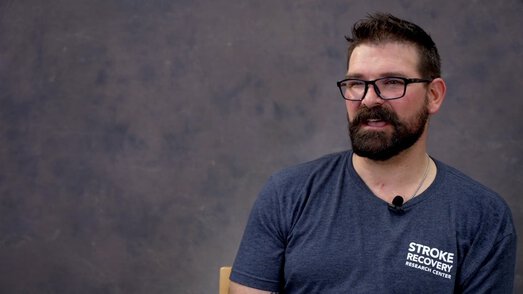
Andrew Glavin
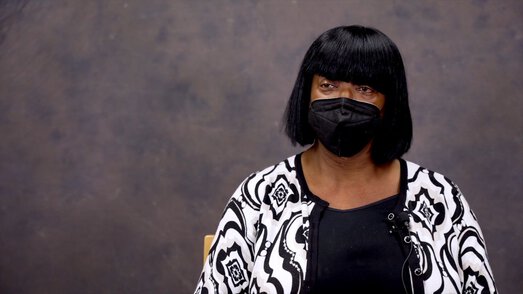
Ann Smalls
About Us
The Stroke Recovery Research Center works to understand and harness brain plasticity by developing restorative post-stroke therapies inspired by basic science.
Through new interdisciplinary collaborations, innovative approaches, and mentored training, we strive to excel in the mechanism-based research needed to develop stronger evidence-based treatments addressing post-stroke disability and contributing to a better quality of life for stroke survivors.
Our Focus
The Stroke Recovery Research Center is specifically designed and organized to address three priorities.
- Understanding and harnessing brain plasticity.
- Understanding the experience dependent nature of post-stroke plasticity.
- Translating restorative post-stroke therapies inspired by basic science
The organizing concept is that a better understanding of the experience-dependent nature of neural plasticity allows us to investigate and exploit inherent neural recovery processes, develop and translate novel mechanism-based interventional strategies and ultimately improve the function and quality of life of individuals recovering from stroke. This knowledge and its translation into clinically effective interventions is facilitated by the development of a theory-based measurement framework including quantitative measures of:
- Normal neurological function.
- Underlying structural and functional damage after stroke.
- Experience dependent neural plasticity during rehabilitation.
- Structural and functional changes post-rehabilitation.
- Functional recovery of each individual patient.
Participate in Stroke Recovery Research
How to Get Involved
The SRRC maintains a Registry for Stroke Recovery (RESTORE), a list of people interested in participating in our research. In RESTORE, we collect contact information, medical and stroke history and any problems caused by the stroke. After enrolling, our teams will be able to use this information to invite you to enroll in studies that may interest you.
If you would like more information about getting involved in our studies, please fill out the form below and one of our team members will contact you.
Changing What's Possible for Stroke Survivors
At the Stroke Recovery Research Center (SRRC), we’re focused on improving stroke survivors’ quality of life through research. Our team is made up of scientists, doctors, engineers, and therapists at the Medical University of South Carolina. We are committed to finding new ways to improve stroke recovery. We research how changes happen in the brain due to stroke and rehabilitation. This informs how we can create and use new technology and therapy for stroke survivors everywhere.
Our Research
Our studies focus on many areas of stroke recovery. We study recovery of hand and arm use, walking, balance, strength, speech, thinking skills, sensation, depression, and fatigue. We are studying many new techniques in brain stimulation, brain imaging, rehab therapy, and exercise.
To find out more about the individual studies currently recruiting stroke survivors, you may visit the South Carolina Research Studies Directory.
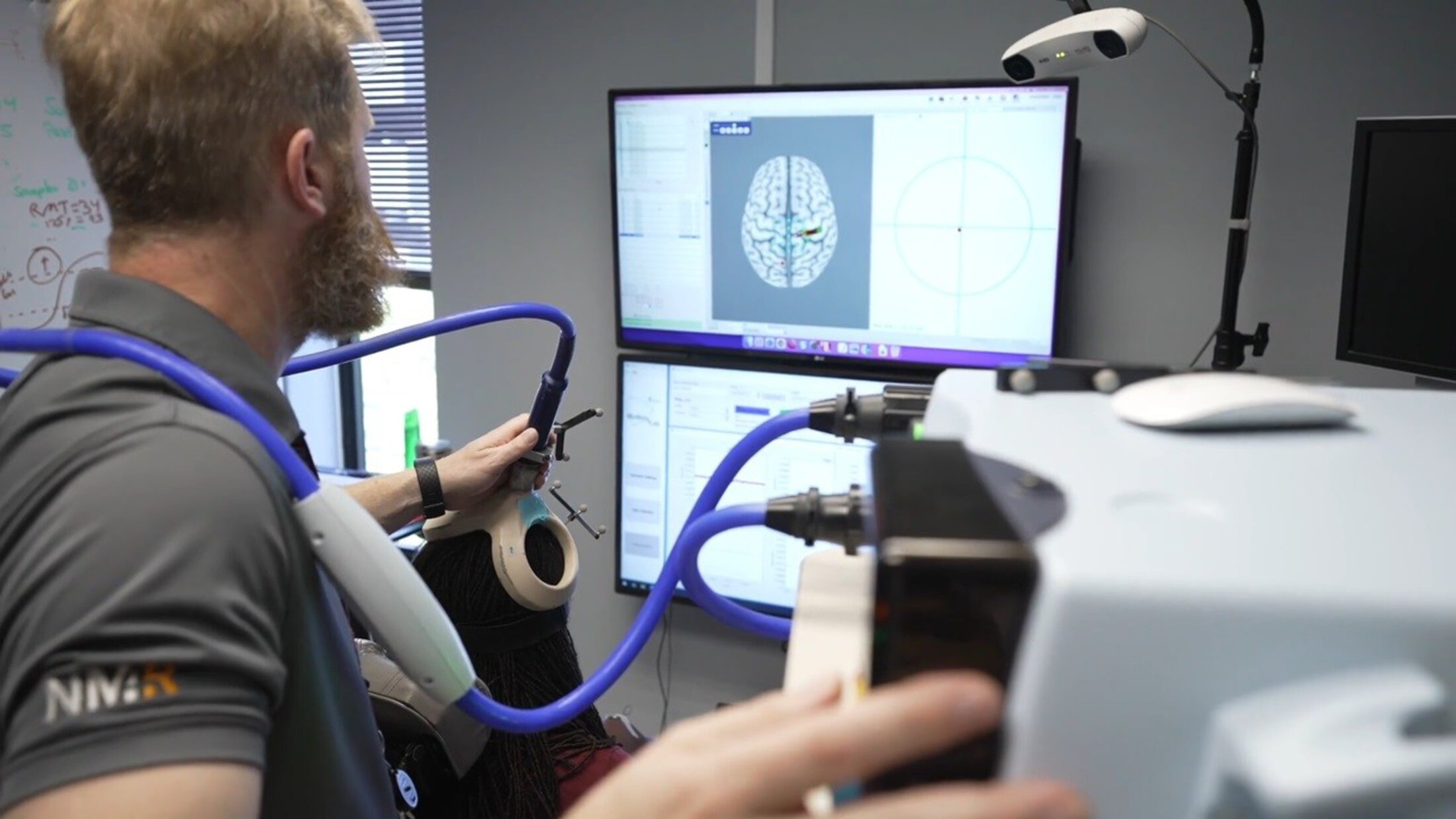
What is Brain Stimulation?
Frequently Asked Questions
We recruit anyone who has ever experienced a stroke and has remaining deficits into our stroke recovery studies. We also recruit controls into some of our studies. These are individuals who have not experienced a stroke but serve as a comparison peer group for those who have. Their participation helps us advance our science.
To get involved in our research studies or receive additional information about participating in studies, please fill out the form above or contact our research team at stroke-recovery@musc.edu or 843-792-1589.
We collaborate with research investigators who study spinal cord injury (SCI) and Parkinson’s disease. For inquiries for research related to either of these medical diagnoses please contact Alyssa Chesnutt 843-792-8171 or hydar@musc.edu to be connected to either of these research teams.
Our team includes professionals from many occupational backgrounds including physicians; physical, occupational and speech therapists; engineers with mechanical and biomedical backgrounds; exercise physiologists; and graduate and undergraduate student research assistants.
Some of our studies are funded by large organizations like the Department of Veteran Affairs and the National Institutes of Health. We are always eager to include Veterans who have experienced a stroke in our studies.
Our address is 77 President Street, Charleston, SC 29425. We are in a free-standing building, on the campus of The Medical University of South Carolina (MUSC), located on the corner of Bee Street and President Street. We have a convenient surface lot with free parking that is available to all research participants.
There is no cost to participate in our studies and no doctor’s order is required. Many studies even provide compensation for time, effort, and/or travel.
We do not require insurance to participate in our studies. Participation in research is a great resource for underfunded or unfunded participants, patients discharged from therapy due to meeting goals, plateau in progress, or transitions between insurance coverage.
Some studies do allow for therapy and research participation to be done at the same time. It is study dependent and something you may want to ask our team about prior to study participation.
The length of time for individual visits is study dependent and typically varies between one and three hours. The number of visits required for each study also varies. We offer two types of research studies –assessment and training studies. Assessment studies typically include fewer total visits, usually requiring one to three appointments for completion. Training studies often include more frequent visits over an extended period. For example, we have a current training study that requires two visits per week for 12 weeks and another that requires three visits per week for 6 weeks.
Principal Investigators
Steve Kautz, Ph.D.
Program Director, Core Director
Robert Adams, M.D.
Core Director
Mark George, M.D.
Core Director
Jihad Obeid, M.D.
Biomedical Informatics Center Assistant Director
Michelle Woodbury, Ph.D., OTR/L
Supervisor of Rehabilitation, Resource Mentor
Jesse Dean, Ph.D.
Co-Investigator
Cindy Dodds, PT, Ph.D., PCS
Co-Investigator
Adviye Ergul, Ph.D.
Co-Investigator
John Kindred, Ph.D.
Co-Investigator
Ramesh Ramakrishnan, Ph.D.
Co-Investigator
Ryan Ross, Ph.D.
Co-Investigator
Takashi Sato M.D., Ph.D.
Co-Investigator
Gabrielle Scronce, PT, DPT, Ph.D.
Co-Investigator
Bryant Seamon, PT, DPT, Ph.D.
Co-Investigator
Stephen Tomlinson, Ph.D.
Co-Investigator
Current Junior Investigators
Kirstin-Friederike Heise, Ph.D.
Lisa McTeague, Ph.D.
Nathan Rowland, M.D., Ph.D.
Past Junior Investigators
Bashar Badran, Ph.D.
Mark Bowden, PT, Ph.D.
Wuwei Feng, M.D.
Chris Gregory, PT, Ph.D.
Catrina Robinson, Ph.D.
Na Jin Seo, Ph.D.
Andy Shih, Ph.D.
Contact Us
Stroke Recovery Research Center
77 President Street
CHP Building 3, CMSC 700
Charleston, SC 29425